
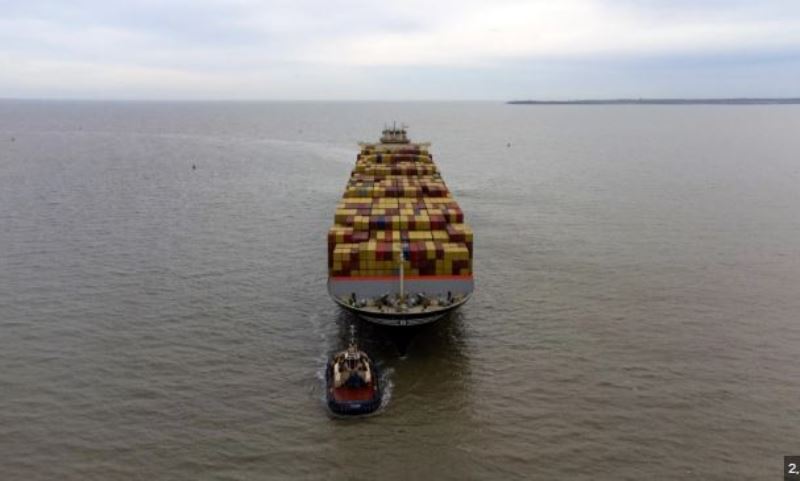
More than 60 countries have pledged to oppose tolls and fees on international shipping routes, sending a strong diplomatic message against attempts to impose charges on vessels transiting through critical maritime waterways, particularly the Strait of Hormuz amid escalating tensions involving Iran.
Announced by the European Union on Monday, the global initiative, titled ‘No Fees, No Tolls’, is backed by all EU member states and 33 other countries, including Australia, Japan, the United Kingdom, Canada and Singapore. The declaration seeks to safeguard freedom of navigation and uphold international maritime law amid growing concerns over restrictions on commercial shipping.
EU foreign policy chief Kaja Kallas said international waterways must remain accessible to all vessels in accordance with international law, warning against attempts to use strategic shipping routes as instruments of political pressure or revenue generation.
“International navigation must remain open to everyone, not to whoever can pay,” Kallas said in a post on X, describing the pledge as a clear diplomatic signal against attempts to exploit international waterways.
The declaration invokes the United Nations Convention on the Law of the Sea (UNCLOS), which establishes the international legal framework for maritime activities. Signatories have opposed unlawful fees, discriminatory restrictions, prior authorisation requirements and other measures that could hamper the lawful passage of vessels through straits used for international navigation.
The countries have also committed to working through international institutions, including the International Maritime Organization (IMO), to protect maritime safety and preserve a rules-based international navigation system.
Strait of Hormuz at the Centre of the Dispute
The initiative comes amid severe disruption in the Strait of Hormuz, a strategically vital waterway between Iran and Oman connecting the Persian Gulf with the Gulf of Oman and the Arabian Sea. Before the conflict involving the United States, Israel and Iran began on February 28, approximately one-fifth of global oil and liquefied natural gas supplies passed through the strait.
Iran has asserted control over shipping movements through the waterway and demanded that vessels meet its conditions for passage. Mohammadreza Naqdi, an adviser to the commander of Iran’s Islamic Revolutionary Guard Corps, has warned that routes considered illegal by Tehran could be closed, including a southern passage near Oman’s coast.
The restrictions have raised concerns across the global shipping and energy industries, as any sustained disruption to the strait can affect oil and gas supplies, freight costs, maritime insurance and international supply chains.
Shipping Traffic Remains Below Pre-Conflict Levels
Shipping data indicates the scale of the disruption. According to analytics firm Kpler, only seven commodity vessels crossed the Strait of Hormuz on October 6, the lowest daily figure recorded since July 23. The number increased to 10 the following day but remained significantly below the more than 20 vessels reported on Sunday and Monday.
Before the conflict, approximately 125 large commercial vessels transited the strait each day. Attacks on tankers, security risks and logistical constraints have since sharply affected traffic, although some oil exports have been diverted through alternative routes.
Diplomatic Efforts Face Challenges
Efforts to restore normal shipping movements remain complicated by disagreements between Tehran and Washington over the conditions for reopening the waterway.
On October 11, Iran’s security chief, Mohsen Rezaei, described the US response to Tehran’s seven conditions for reopening the strait as “insufficient”. Iran’s demands include an end to hostilities, the lifting of the US naval blockade and the unfreezing of Iranian assets.
While Tehran has made the restoration of maritime security and reopening of the strait central to its demands, Washington has sought to address concerns over Iran’s nuclear programme as part of negotiations.
The EU-backed initiative highlights growing international concern that the crisis could undermine the principle of free passage through international waterways. For the global maritime industry, the outcome will have significant implications for shipping operations, energy security, freight markets and the stability of international trade.