
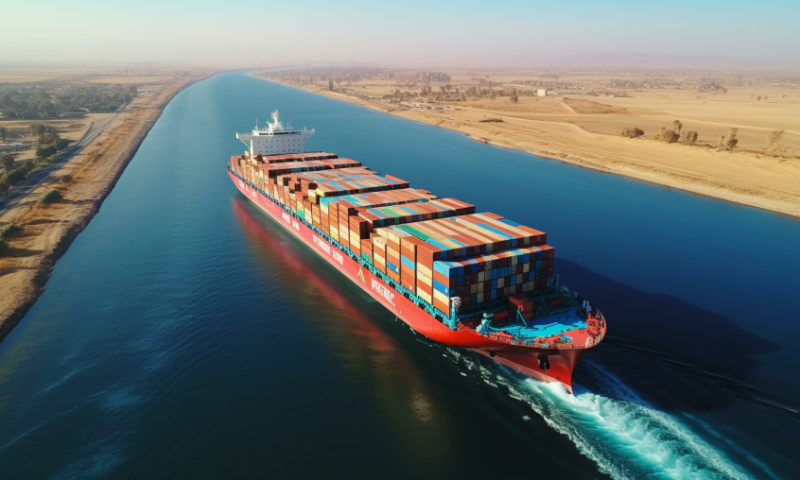
The gradual recovery of shipping through the Suez Canal is raising expectations of shorter transit times, lower freight costs and improved schedule reliability for global trade. Major container lines are restoring selected services through the Red Sea corridor after years of diversions around the Cape of Good Hope.
Container capacity passing through the Suez Canal averaged approximately 753,000 TEU per week during the first two weeks of October, reaching around 52% of the comparable pre-disruption level recorded in 2023, according to Clarksons Research data reported by industry sources. Although traffic remains below normal levels, the recovery marks a significant step towards restoring the route’s role in global shipping.
Shorter routes could ease shipping costs
The Suez Canal offers a shorter connection between Asia and Europe than the alternative route around southern Africa. Returning to the canal can reduce voyage duration, fuel consumption and vessel deployment requirements, potentially easing pressure on freight rates and improving delivery schedules.
The diversions introduced during the Red Sea security crisis increased sailing distances and absorbed additional vessel capacity. A sustained return to the Suez route could release some of that capacity back into the market, adding to competitive pressure on carriers and potentially supporting lower freight rates.
Shipping lines restore services cautiously
Several carriers are progressively returning selected services to the corridor. Maersk and Hapag-Lloyd began restoring sailings on parts of their joint network in July, while further service changes have been announced as operators reassess routing options. The Suez Canal Authority has also reported that pricing flexibility and engagement with shipping lines have helped encourage services to return.
For exporters and importers, particularly those moving goods between Asia, Europe and the Mediterranean, shorter voyages could reduce inventory-in-transit periods and improve supply-chain planning. Indian exporters of textiles, apparel, engineering goods and other time-sensitive products may also benefit if the recovery continues.
However, the improvement remains conditional. Security risks in the Red Sea, war-risk insurance premiums and possible route changes continue to influence carrier decisions. Port congestion and schedule disruptions can also offset some of the benefits of shorter voyages.
A sustained recovery would offer relief to shippers and strengthen the efficiency of the Asia–Europe trade corridor. For now, businesses should monitor carrier advisories and compare total transport costs, transit times and insurance conditions before finalising shipping plans.