
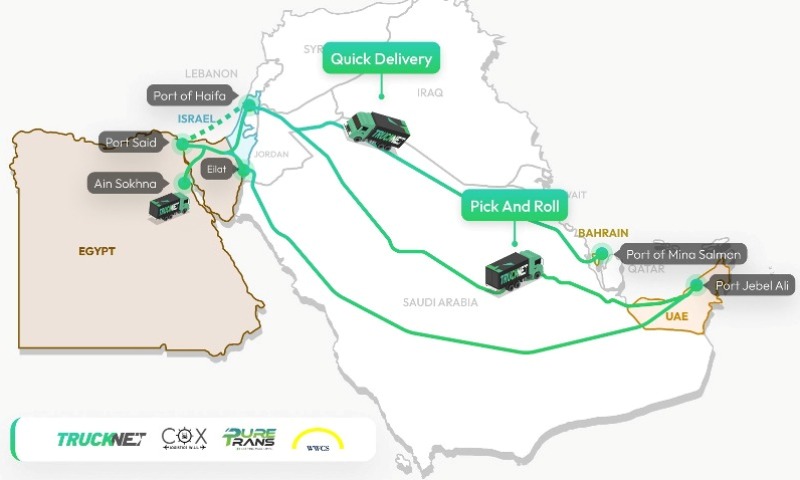
TruckNet, a digital shipping company, is preparing to operate a line of fuel tankers from Israeli ports to Arab countries. TruckNet operates in Europe, the Persian Gulf, and Israel. The company connects to the operational systems of truck owners and presents transportation options to cargo owners looking for available transport.
The company also conducts auctions for transportation costs, according to the minimum price set by the truck owner. Once a winner is chosen and the transport is confirmed, the app plans an optimal route for the driver according to the size of the truck and the loading and unloading points, to avoid, for example, bringing a long truck into a densely urban area, and a high truck onto a road with bridges lower than it. The company is traded on the Tel Aviv Stock Exchange with a market value of about NIS 34 million.
According to an agreement signed by TruckNet with a company from the Persian Gulf, a pilot will soon be conducted to examine the procedures for carrying out the transports. The use of Jordanian or Israeli tankers for the transports will also be considered. This has the potential to be a significant logistic project and reach the goal of 34,000 tons transported of fuel and products per month, which is about 800 containers.
The cost of transportation per kilometer has risen since the agreement began from $1.2 to about $2 per kilometer after Arab countries raised the transit fees for trucks. This increased the need to import fuels from ports as close as possible to their final destination. This is a continuation of the line it currently operates to transport goods on the same route. This specific route avoids the disruptions currently caused by the Houthi and primarily serves to import goods faster from the East through the port of Jebel Ali in the Emirates. It also allows Israeli companies to expedite the export of urgent shipments to destinations in the East.
TruckNet’s success grows with new agreement
The Persian Gulf and the Arabian Peninsula are one of the world’s largest suppliers of crude oil. Yet, the region experiences occasional shortages of refined oil products, such as diesel or gasoline, which forces countries in the same region to import them from Europe and the Middle East.
Hanan Friedman, CEO of TruckNet, stated: “In light of the success of the continental line we have operated between the Persian Gulf and the ports of Israel in recent months, which provides a solution for goods seeking a fast and secure alternative to shipping routes threatened by the Houthis, I am happy to announce the first of its kind pilot agreement. The goal of this technology is to test the planning process for transporting large amounts of fuel and its related products from the opposite direction: from the Mediterranean Sea, through the ports of Israel and from there to the Arab countries and the Persian Gulf. This is about completing the circular route, which will enable the integration of TruckNet’s system specializing in matching cargoes to empty carriers. We are proud to continue to lead the express shipping revolution aimed at turning Israel into a central hub for international trade.”