
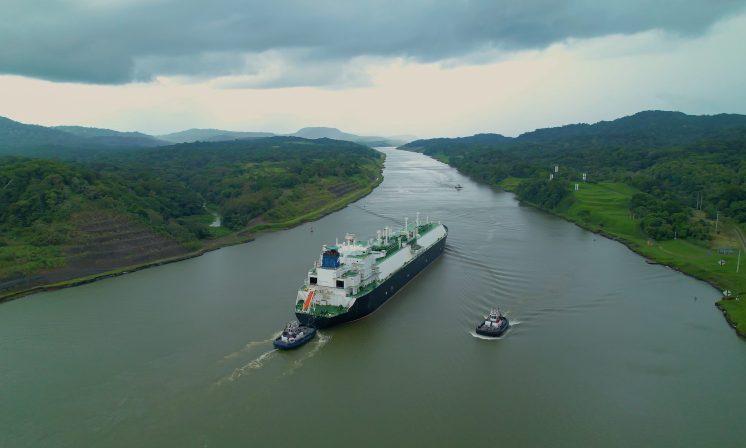
The Panama Canal Authority (PCA) is weighing-up long-term solutions to bolster the resilience of its key shipping route, including opening a new reservoir and making pre-booking permanent.
Last year, when the country was in the depths of an El Nino-induced drought, the PCA reduced daily shipping transits through the canal, and warned slots could fall to as low as 18 a day in February. However, a series of mitigation efforts by the ACP meant 20 became the nadir.
The canal has a design capacity of 36 transits a day, although this is typically expressed as 34 to 38, and the limits caused serious bottlenecks to shipping.
But at the end of last month, the Panama Canal returned to full slot capacity, and all the liner services affected returned to their regular operation.
And this week, Dr Ricaurte Vásquez Morales, canal administrator, revealed that the PCA was now exploring “long-term solutions” to “further enhance the canal’s reliability”.
He said: “In a world marked by geopolitical tensions, economic uncertainty and climate variability, the significance of the Panama Canal in ensuring reliable transit of goods through its waters – 40% of which constitute energy commodities crucial to global markets – cannot be overstated.
“We’ve witnessed first-hand over the past year how these risks can disrupt global trade,” he added.
One “promising” solution being explored, Dr Vásquez Morales revealed, is a new reservoir, which would provide capacity for an additional 11 transits.
But he added that its construction would demand support from government and the communities living in the canal watershed area, and the likelihood and timeline of this is currently unknown.
Dr Vásquez Morales also said the PCA aimed to make the pre-booking system employed to aide fallout from reduced transit slots, a permanent fixture. Previously only about 70% of transits were booked in advance.
“The diligent use of the reservation system for all vessels, necessitated by the challenges posed by the drought, notably enhanced the canal’s reliability”, he said.
He said the system ensured all pre-booked vessels saw “significantly reducing waiting times”, with Q1 seeing a 10-hour reduction in wait times, year on year.
“This translated to not only to improved efficiency, but also tangible environmental benefits from reduced vessel idling and consequent carbon emissions.
“As we aim for lasting operational improvements, our goal is to make this reservation system more permanent, even as transit volumes begin to normalise, to further enhance the canal’s reliability.”
Meanwhile, a recent update to PCA regulations has meant that any vessel with a reservation could be be eligible to transit two days or more early.
Dr Vásquez Morales concluded: “We must recognise the need for ongoing investment and innovation to ensure its continued viability in the face of evolving threats and shifts in trade flows.
“Climate variability, in particular, poses a long-term risk to the canal’s operations, with extreme weather events like El Niño presenting potential challenges. Additionally, as Panama’s population grows and seaborne trade expands, water demand is only expected to rise.”