
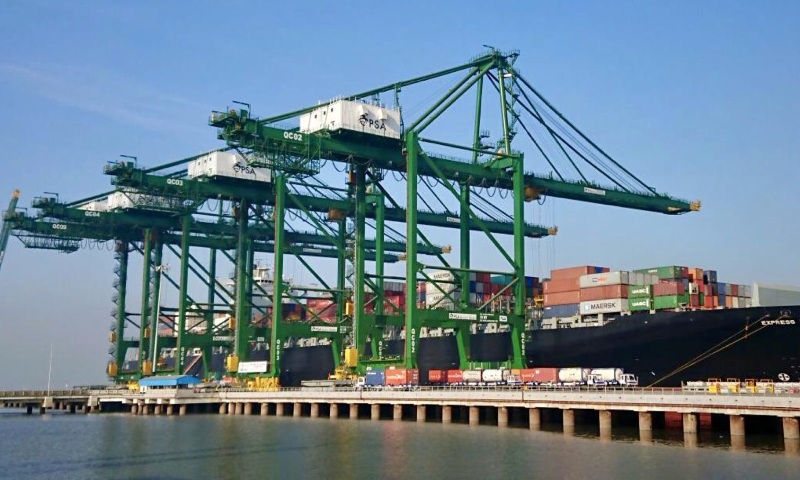
Container re-handlings on large vessels berthed at PSA Singapore (PSA) grew by 8 per cent in the first half of 2024 over the previous year.
According to the port, this is due to high vessel utilisation caused by the Red Sea crisis, which results in shipping lines relying more on PSA to optimise container stowage on board their vessels and to ensure sea safety, especially due to most vessels taking the longer route around the Cape of Good Hope.
This has resulted in longer vessel port stays, which in turn impair the berthing time for arriving vessels, even while PSA maintains its production.
PSA noted that its early efforts and tight coordination with shipping lines and other stakeholders have significantly reduced interruptions.
The PSA Singapore Management team has reportedly worked closely with unions and received significant support from Singapore’s Maritime & Port Authority and Ministry of Transport to ensure that the port ecosystem runs smoothly.
PSA transported 7 per cent higher container volumes in the first half of 2024 than in the same time last year.
These reportedly include increasing capacity and capacities via automation and smart technology. In addition to the reactivation of certain berths and yard space at Keppel Terminal, PSA’s Tuas Port now runs nine berths and plans to add two more by the end of the year.
In May, PSA and Pacific International Lines (PIL) completed their first experiment of low-carbon green cargo to create a sustainable supply chain ecosystem.