
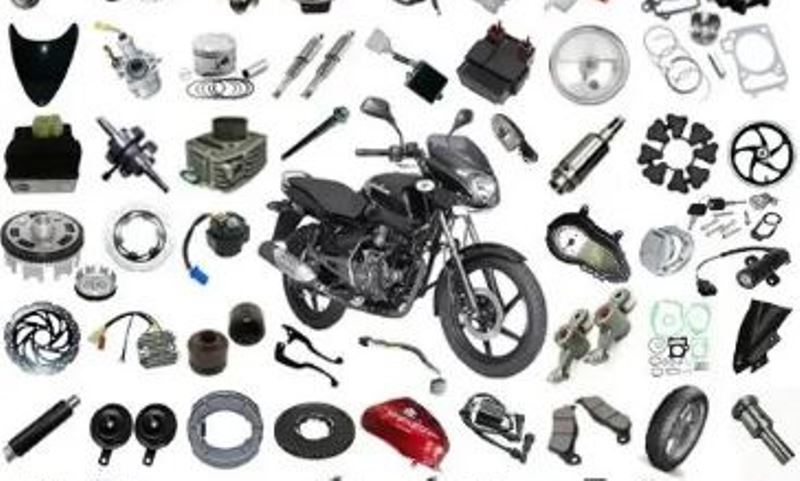
Indian exports of motorcycle parts to both developed and developing economies have grown significantly over the last three years, driven by government initiatives such as the Production-Linked Incentive (PLI) scheme, which has boosted domestic manufacturing and strengthened the sector’s global presence, two people said.
This expansion has helped position India as a key supplier of motorcycle parts and accessories to international markets.
Citing official data from the commerce ministry, the first person said that exports of motorcycle parts and accessories increased sharply from $558.05 million in April-January of FY22 to $709.22 million in the same period of FY25. This reflects a 27.09% growth over the three-year period.
“The export figures reflect strong growth in overseas shipments, which indicates that the manufacturing ecosystem in India has improved,” the second person said.
At the same time, as per the commerce ministry data, imports of these components declined from $408.59 million to $371.82 million over the same period, indicating a growing reliance on domestic production.
Industry experts attribute this rise in exports to India’s deeper integration into global supply chains, with manufacturers expanding their reach in key markets such as Latin America, Africa, and Southeast Asia, where demand for affordable and durable components remains strong. The steady growth also reflects the industry’s ability to compete with major global suppliers such as China and Thailand.
In FY24, exports of motorcycle parts stood at $741.46 million, marking a nearly 13.5% increase from $653.30 million in FY23. While exports had dipped to $653.30 million in FY23 from $680.89 million in FY22, the strong recovery in FY24 underscores growing global demand for Indian components.
Meanwhile, imports have seen a consistent decline, falling from $494.39 million in FY22 to $425.68 million in FY23 and further to $343.84 million in FY24—a cumulative drop of over 30% in two years. This shift suggests that domestic manufacturers are not only expanding exports but also replacing imports, reflecting improved self-reliance in component production, aided by the PLI scheme.
Overall, the exports of auto component, including parts of motorcycles, have shown steady growth over the past three years, increasing from $6.88 billion in 2021-22 to $7.70 billion in 2023-24, with the US, Turkey, Germany, Mexico, and Brazil remaining the top destinations.
The PLI scheme for auto components was approved by the government on 15 September 2021, with a budgetary outlay of ₹25,938 crore for a five-year period spanning FY22-23 to FY26-27. The scheme aims to enhance domestic manufacturing capabilities, attract investments, and reduce import dependence while boosting exports.
Major export destinations for motorcycle parts include Bangladesh, Germany, the US, UK, Indonesia, the UAE, Brazil, Turkey, Thailand, Sri Lanka, Italy, Egypt, Colombia, Congo, Guinea Vietnam and China.
“As India aims to become a global manufacturing hub, the rise in motorcycle parts exports to both developed and developing countries shows its potential to be a key player in the global supply chain. These trade developments create new opportunities for growth and expansion,” said Dattesh Parulekar, assistant professor of international relations at Goa University.