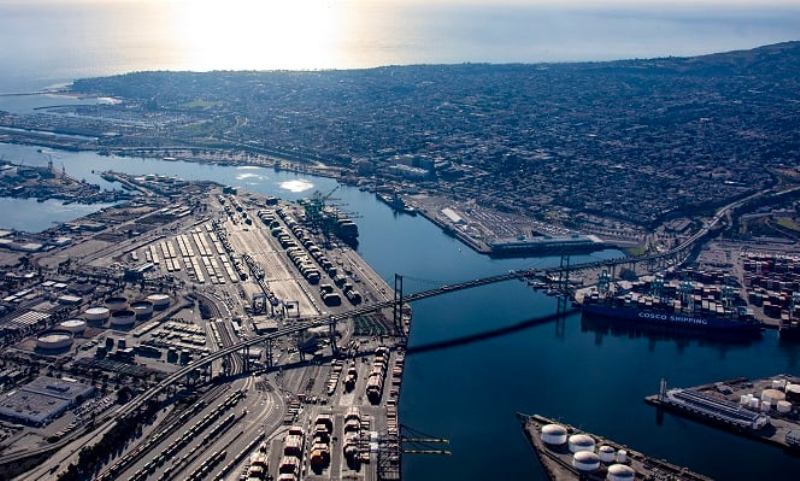
The Port of Los Angeles recorded 824,323 TEUs in container throughput in February, marking the second-busiest February on record for the United States’ largest container gateway.
The strong performance reflects steady cargo demand across trans-Pacific trade lanes, with imports continuing to dominate overall volumes. Port authorities noted that retailers accelerated shipments earlier in the year to ensure inventory availability ahead of seasonal demand and supply chain uncertainties.
Loaded import containers accounted for the largest share of the February volume, while loaded exports and empty container movements made up the remainder of the throughput. Despite global shipping disruptions and shifting trade routes, cargo flows through the Southern California gateway remained resilient.
According to Gene Seroka, the port continues to maintain stable operations while closely monitoring geopolitical developments and trade policy changes that could influence global cargo movements.
The Port of Los Angeles serves as a critical hub for trans-Pacific commerce, handling a significant share of containerized imports from Asia and playing a central role in U.S. supply chains. Port officials expect volumes to remain steady in the coming months as retailers replenish inventories and shipping networks adjust to evolving global trade conditions.
