
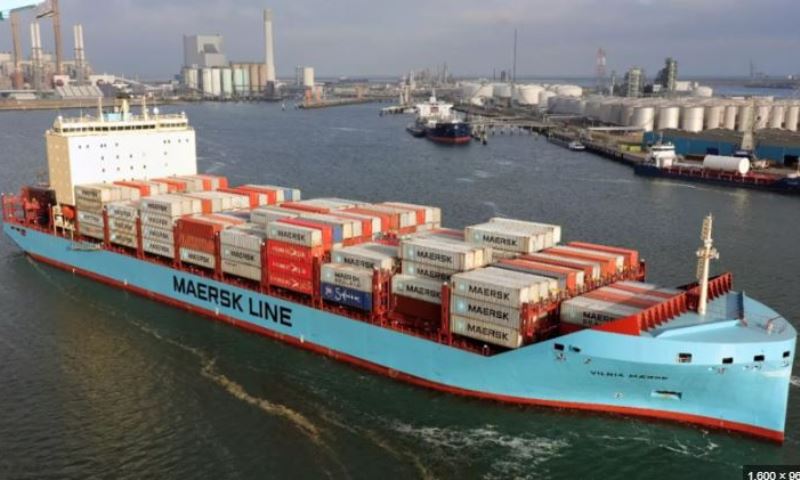
Global shipping major Maersk has temporarily suspended its shipping service through Ukraine’s Chornomorsk Fishing Port following the worsening security situation in the Black Sea, becoming the second major company this month to halt operations from the port.
The decision comes amid intensified Russian attacks on Ukraine’s maritime export routes. Earlier, leading Ukrainian grain exporter Kernel Holding also suspended operations at Chornomorsk’s main port after a series of missile and drone strikes.
In a statement issued on Tuesday, Maersk said that the prevailing operational conditions no longer allow it to continue servicing cargo through Chornomorsk Fishing Port.
“Due to the current situation affecting our operations, we are unable to continue providing service to Ukraine via Chornomorsk Fishing Port. Therefore, our service via Chornomorsk Fishing Port is temporarily suspended until further notice,” the company said.
As part of the contingency measures, Maersk announced that vessels originally scheduled to discharge cargo at Chornomorsk Fishing Port will instead be diverted to Constanta Port in Romania, with all future import shipments for Chornomorsk also rerouted through the Romanian gateway.
While the Ukrainian Ministry of Infrastructure confirmed that the deepwater commercial port of Chornomorsk, along with other ports in the Greater Odesa region, remains operational, it clarified that the Chornomorsk Fishing Port is a separate terminal operated independently.
The latest disruption underscores the growing risks facing maritime trade in the Black Sea. Russia has repeatedly targeted Ukraine’s port infrastructure throughout the conflict, with attacks on cargo vessels and export terminals intensifying in recent weeks. Moscow maintains that its strikes are aimed at military-related infrastructure and fuel storage facilities.
Ukraine, once responsible for approximately 6% of global wheat exports and 11% of global corn exports, has seen its Black Sea grain export capacity significantly reduced due to ongoing missile and drone attacks. According to traders and industry analysts, nearly one-third of the country’s grain export capacity through Black Sea ports has been lost since the conflict began.
The continued instability in the region is expected to keep pressure on global grain supply chains and shipping operations, with carriers increasingly reassessing operational risks in the Black Sea.