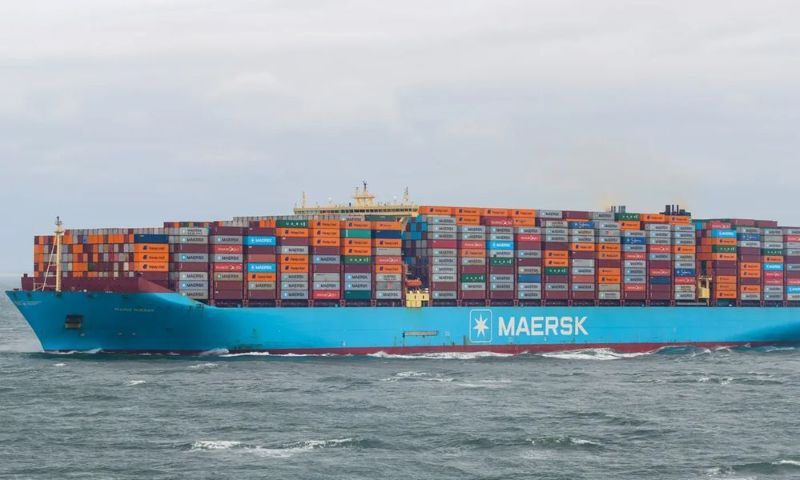
A.P. Moller–Maersk has introduced a specialised service product designed to support India’s refrigerated cargo exporters amid ongoing uncertainty in the Red Sea corridor, according to industry sources familiar with the development.
The new product, tailored for perishable shipments such as grapes, pomegranates and other temperature-sensitive commodities, is intended to give Indian shippers more predictability during the upcoming peak export season. The move comes as cold-chain exporters face heightened transit risks and extended voyage times due to widespread carrier diversions around the Cape of Good Hope.
Sources said Maersk has been in discussions with key exporters and freight forwarders to position the offering as a “protected” pathway for reefer cargo, using controlled routing options in and around the Red Sea while maintaining close monitoring of vessel movements.
With the European market forming the backbone of India’s fresh-fruit shipping season from January to April, exporters have raised concerns about potential spoilage and market-window losses if transit times continue to fluctuate. Maersk’s new service is expected to provide greater assurance on equipment allocation, voyage integrity and arrival windows.
Industry officials note that while carriers remain cautious about fully reinstating their traditional Suez Canal routings, the rising demand for reliable reefer connections has pushed lines to craft selective, risk-managed solutions rather than rely solely on long Cape diversions.
Maersk has not issued a formal public statement on the product, but sources said the company is aiming to stabilise cold-chain flows from Indian gateways such as Nhava Sheva and Mundra, where reefer volumes typically surge during the first quarter of the year.
Exporters say the introduction of such a product could offer much-needed relief at a time when rising freight costs, limited equipment availability and unpredictable routing continue to strain supply chains.
Further details on capacity allocation, rotation specifics and pricing are expected to emerge as the service ramps up ahead of the new export cycle.
