
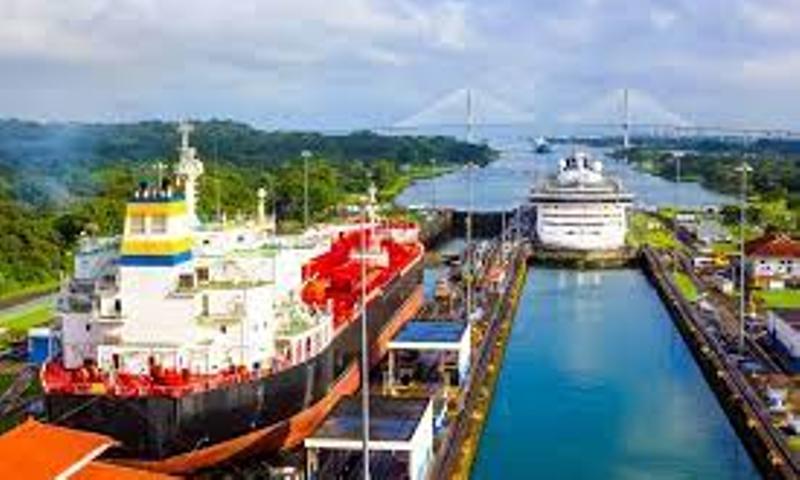
Shipping traffic in the Panama Canal has witnessed a recent uptick following relief from drought conditions, as per reports.
The droughts were thought by international scientists to be driven by El Niño, a weather abnormality that saw reduced rainfall, as opposed to climate change. Despite its recent alleviation, the Financial Times has reported that water levels yet remain lower than usual.
Ship arrivals in the canal totalled 739 in April, down from 1,026 the previous year. This contrasts with a low of 692 in February, as reported by Marine Traffic, following over six months of disruption.
Water levels in Lake Gatún, the canal’s rain-fed reservoir, dropped to record lows in June of last year and remained there until mid-March of this year. Due to these stifling events, the Panama Canal Authority limited movement through the canal, subsequently leading to a buildup of ships awaiting their transit.
Despite drought being the most pressing issue for trade in the region, Panama remains among the world’s wettest nations. According to the Financial Times, the water levels are expected to rise by more than 2 metres in the upcoming May to December rainy season.
However, as seen in a study released by the World Weather Attribution group of scientists who examine extreme weather trends, El Niño was largely responsible for the reduced rainfall around the canal, which was only compounded by the warming of the Pacific Ocean’s surface.
In 2023, annual rainfall fell by roughly a quarter compared to average levels. Researchers also marked it as Panama’s third driest year on record. Following their analysis of weather data and simulating climate scenarios, the researchers concluded that El Niño had doubled the likelihood of decreased rainfall in 2023 and that it was this phenomenon, as opposed to global warming, that had primarily driven the drought.
Despite these unprecedented lows, the authority’s management of the passage prevented the surrounding communities in Panama from suffering more severe consequences than had been felt in previous droughts.