
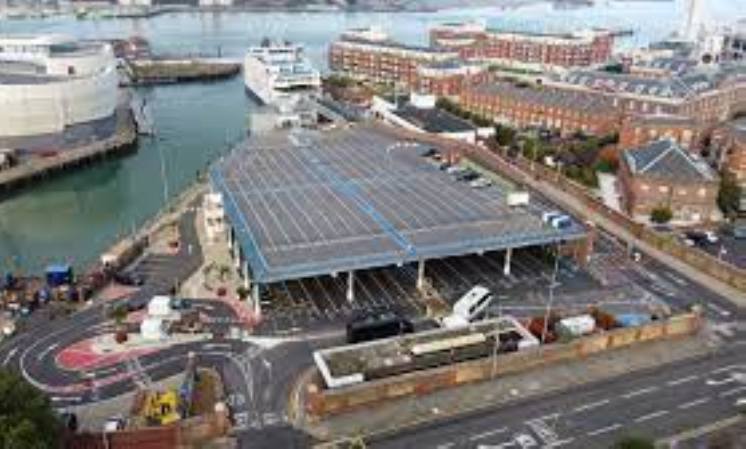
The installation of the cutting-edge solar and battery system at Portsmouth’s port has passed a final milestone and is now fully operational.
Managed by the in-house energy services and building services teams of Portsmouth City Council, installed by Custom Solar and assisted by engineers at the port, the project began with installing roof-mounted solar panels across several buildings, large battery storage, and the first solar canopies at a UK port.
The last piece of the project was finalised in July, where an upgraded connection to the national grid allowed the full potential of the 1.2 megawatt peak system to be realised.
This system, comprised of 2,660 solar panels, provides an impressive 35% of the site’s electricity. With this, the council-owned Portsmouth International Port is closer to becoming one of the UK’s first net carbon neutral ports.
The solar system is complimented with an onsite battery with a capacity of 1.3 megawatt hours, which can power a typical home for four months. It captures renewable energy, which would otherwise be exported to the local electricity network, and redirects it to the port’s buildings when required.
The battery and new solar system work in conjunction with each other, providing balancing services to the national grid and storing power during periods of lower pricing.