
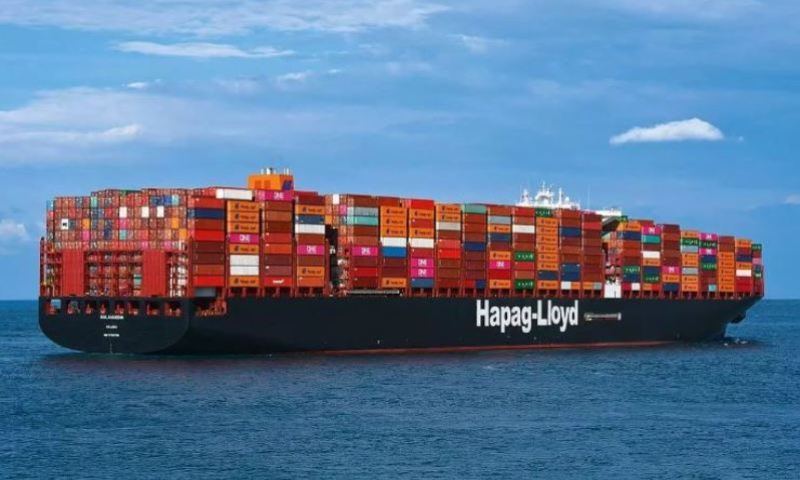
Plans by major carriers to re-establish container ship services through the Red Sea and Suez Canal corridor have taken a setback as Maersk and Hapag‑Lloyd recently announced that selected sailings will be rerouted around Africa via the Cape of Good Hope amid ongoing security concerns and “unforeseen constraints” in the Red Sea region.
Earlier in 2026 the two carriers, operating under their Gemini Cooperation alliance, had begun cautiously reintroducing limited Red Sea transits after nearly two years of avoiding the route due to threats from militant activity and regional instability. But deteriorating conditions tied to the broader Middle East security situation prompted the shift back to the longer Cape route for several major services — including the ME11 and MECL lines linking Middle East, India, the Mediterranean and the U.S. East Coast.
According to the latest advisories from Maersk, sailings on affected services will avoid the Bab el-Mandeb Strait and Suez Canal until it is deemed safe to resume, with the safety of crews, vessels and cargo cited as the key priority.
The decision underscores the fragile nature of efforts to restore Red Sea transit, even after a period of relative calm allowed limited return voyages earlier this year. The detour around Africa adds significant distance and time to voyages but remains the preferred option for many operators when Red Sea security cannot be assured.
Shipping analysts say that how long the reroutes persist will depend on evolving risk perceptions in the region and on diplomatic and military developments that could influence maritime safety conditions along one of the world’s most important trade corridors.