
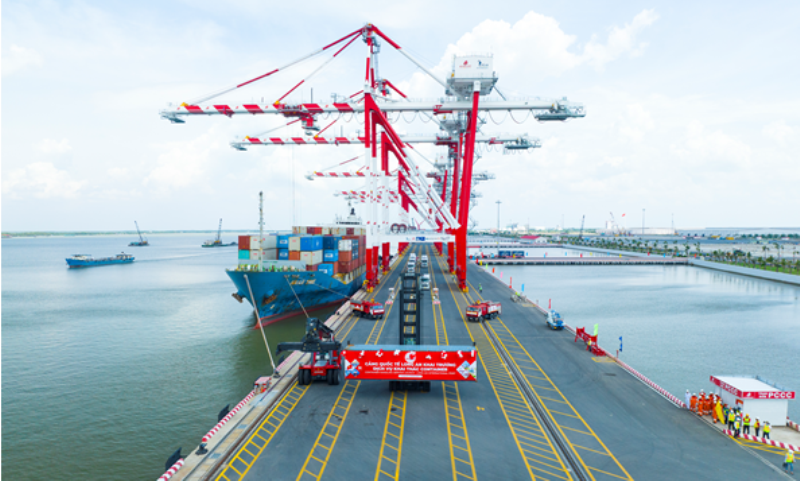
A rise in demand for import and export, especially through inventory replenishment in the United States and Europe as well as supply—expected to be stable till 2025—will help Vietnamese seaport firms recover their yields, the country’s SSI Securities Corporation recently said.
Rising shipping fees and new regulations on seaport service charges are expected to steer Vietnam’s seaport and logistics sector through headwinds this year, a domestic news agency reported.
Geopolitical tensions may also push up container freight rates this year, the firm said.
US retailers will restock after reducing inventories over the past one and a half years, the company said. The US Federal Reserve’s further interest rate cuts will support consumer spending and manufacturing, it noted.
Seaport capacity will, however, not change much till 2025, when a number of large deep-water ports will become operational.
These include four container terminals at Lach Huyen Port and Nam Dinh Vu 3 Port, both in the northern city of Hai Phong, and Gemalink 2A Port in Ba Ria-Vung Tau province, with a combined capacity of 3.3 million TEUs, or 12 per cent of container throughput through the country’s ports last year.
Results of seaport enterprises’ operations were quite good last year when the volume of goods through seaports grew by 5 per cent, with the best performers in the central and southern regions.
Experts feel though most logistics firms saw a decline in revenues last year, they can record a recovery in output because of a rise in production activity, helping ease the pressure on average freight rates.