
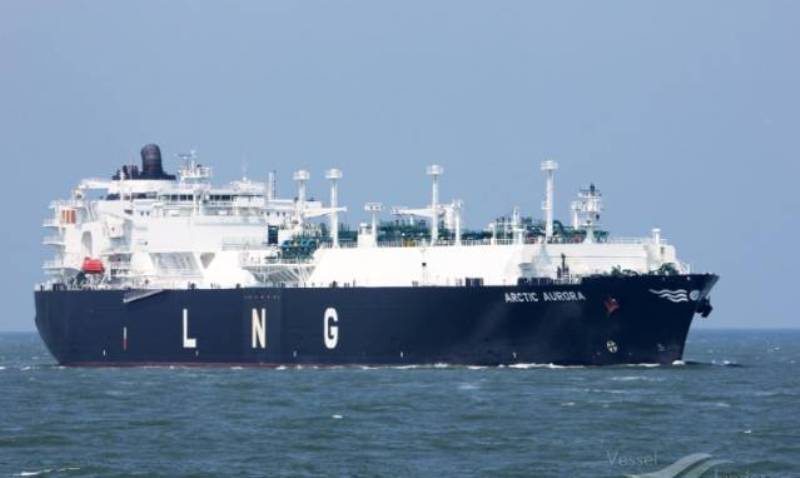
Liquefied natural gas shipping rates have hit multi-year lows and may extend losses going into 2025, analysts and shipping sources said, with new tankers being added at a faster rate than LNG production is rising and spot demand still tepid.
New LNG tankers, built in anticipation of rising U.S. exports after a plunge in Russian gas supplies to Europe in 2022, are coming online earlier than liquefaction projects, which have been delayed amid inflation from strong wage growth and a shortage of skilled labour and
equipment.
With more ships expected to come, freight rates for LNG tankers may remain depressed until late 2025 when new production starts up, said Samuel Good, head of LNG pricing at commodity pricing agency Argus.
“Some liquefaction capacity delays, mainly in the U.S., have helped cause this mismatch between fleet growth and LNG supply growth,” he said.
LNG freight rates for the Atlantic and Pacific basins fell on Friday to $20,750 and $36,750 per day respectively, according to pricing agency Spark Commodities.
The rates are down 87% in the Atlantic and 78% in the Pacific from year-ago levels, and are the weakest for that period since at least 2019.
There is no arbitrage opportunity between the U.S. and northeast Asia via the Cape of Good Hope for the next 12 months, according to Spark Commodities, making it more profitable for U.S. cargoes to be delivered to northwest Europe.
“With the market signalling U.S. cargoes to Europe, Asia will have to source more of its LNG locally, resulting in many LNG vessels in both the Atlantic and Pacific largely remaining within basin,” said analyst Qasim Afghan.
“This lower ton mileage and hence higher vessel availability, when combined with a large number of newbuildings entering the market, create some of the major factors causing LNG freight rates to plummet in recent months.”
There were around 45 newbuild deliveries so far this year up to early October, according to Argus’ Good, with at least as many scheduled in the next six months, pending delays to deliveries.
“We don’t see this pace of additions slowing significantly until mid-2026,” he added.
A shipbroker estimated that nearly 70 new ships this year will be added to the global fleet of close to 800 vessels, with more coming next year. He declined to be identified as he was not authorised to speak to the media.
Tepid demand for LNG in Europe and Asia has also weakened the call for vessels for delivery of the fuel, the shipbroker said, with European storage largely already full ahead of winter.
There is no economic incentive for traders to store LNG on vessels in the absence of a contango structure where prices are higher in future months, they added.
“Using vessels as floating storage results in fewer vessels in the market… But this time we are not seeing that opportunity at all.”