
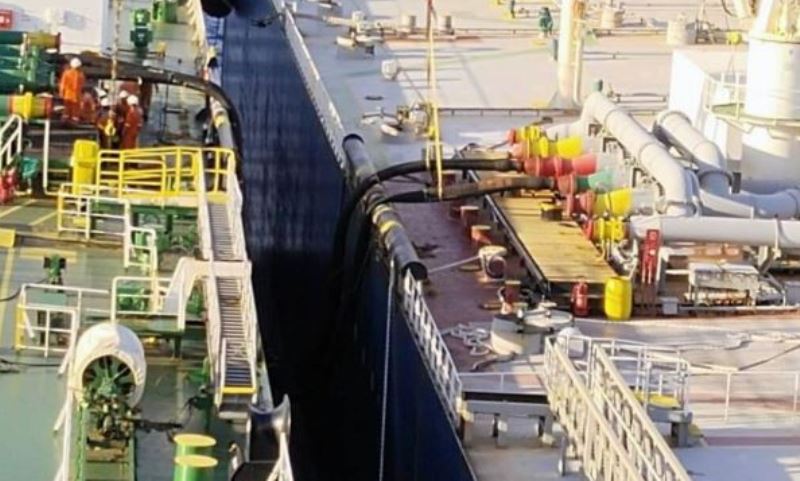
South Africa has introduced a new regulatory framework for offshore ship-to-ship (STS) transfers, sharply increasing penalties and setting strict environmental conditions in a bid to protect coastal ecosystems and the endangered African penguin.
Under regulations signed by minister of forestry, fisheries and the environment, Dr Dion George, transgressors face fines of up to R2m ($110,000), imprisonment for as long as five years, or both.
The new rules, published under the National Environmental Management: Integrated Coastal Management Act, ban STS transfers in marine protected areas, aquaculture zones, and within three nautical miles of the high-water mark. In Algoa Bay, one of the world’s busiest offshore bunkering hotspots, transfers will be restricted to designated anchorages and subject to seasonal limits.
Operators will be required to monitor for penguins and marine mammals, deploy hydrophone systems, and submit independent environmental management plans. All crew will have to undergo environmental awareness training, and operators must maintain spill-response vessels on standby within five nautical miles of shore. Transfers will also be prohibited in poor weather, with wind speeds above 22 knots or wave heights over 2 m.
The measures follow years of controversy over offshore bunkering in Algoa Bay, where environmental groups have raised alarm over pollution risks and penguin population decline linked to increased tanker traffic.
South Africa’s clampdown adds to a growing list of jurisdictions seeking to rein in STS activity over the past 18 months. Greece has tightened enforcement around the shadow fleet in the Aegean, Spain has increased surveillance of transfers off Ceuta, and Denmark has stepped up monitoring in the Baltic. Meanwhile, Malaysia and Indonesia have also rolled out new restrictions in the Malacca Strait, a global oil transit chokepoint, as governments grow more concerned about safety and environmental risks tied to the shadow fleet and unregulated ship-to-ship operations.