
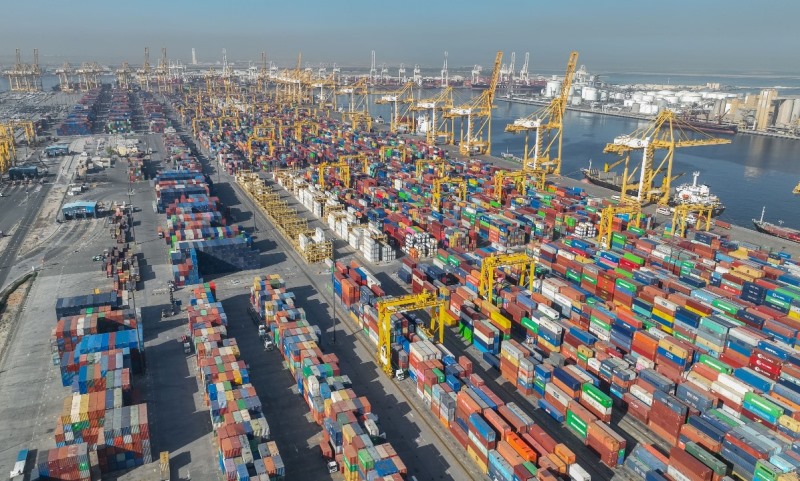
The Middle East’s transhipment landscape is undergoing a significant transformation as major regional hubs, once fierce competitors, now experience a shared surge in cargo volumes driven by shifting global trade dynamics.
Ports such as Jebel Ali in the UAE, King Abdulaziz Port in Saudi Arabia, and Hamad Port in Qatar are all benefiting from rising transhipment demand amid Red Sea disruptions, re-routed Asia–Europe trade, and increased regional integration. Industry sources say the competition between Gulf ports has given way to complementary growth, supported by massive infrastructure investments and strategic alliances with global shipping lines.
According to port officials and logistics experts, the diversification of cargo flows and the growing presence of shipping alliances have reduced concentration risk and allowed multiple hubs to thrive simultaneously. Jebel Ali remains the region’s leading gateway, while Saudi Arabia’s ports are rapidly gaining market share under Vision 2030, which aims to make the kingdom a global logistics centre. Meanwhile, Oman’s Sohar and Duqm ports are emerging as key alternative gateways for East-West trade.
Analysts say the Middle East’s transhipment sector is now moving from competition to collaboration, positioning the region as a central pivot in global maritime trade, with container volumes projected to maintain double-digit growth through 2026.