
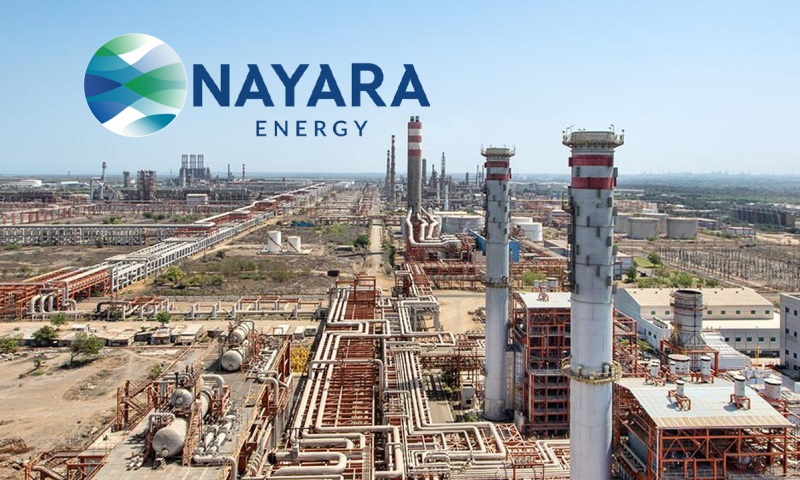
Sanctions-hit refiner Nayara Energy has doubled its fuel exports in November, tapping new markets such as the Bahamas and Taiwan, and routing nearly a third of its cargoes through ship-to-ship transfer hubs that are often used to mask the final buyer.
Russia’s Rosneft-backed Nayara exported 150,000 barrels per day (bpd) of fuels last month , up from 75,000 bpd in October, and the highest since March, according to Kpler, the global real-time data and analytics provider.
Nayara shipped “roughly a third of its November clean-product cargoes to ship-to-ship hubs such as Fujairah and Sohar. These locations are often used in sensitive trades because they help blur the trail to the final buyer,” said Sumit Ritolia, lead research analyst, refining and modelling at Kpler.
Nayara was sanctioned by the EU in July, which significantly hit its crude sourcing and refined product exports. Things have since improved for the company. Nayara has not been sanctioned by the US, but its main shareholder Rosneft has been.
Fujairah in the UAE and Sohar in Oman-both on the Gulf of Oman-are major shipment and storage hubs, tapped widely for ship-to-ship transfers and transshipment of crude and products. Suppliers in Russia and Iran, sanctioned by the West, often use ship-to-ship transfers to hide oil trade trails and avoid sanctions-related complications.
Nayara’s exports in November were boosted by shipments to new destinations such as the Bahamas, Taiwan, Sudan, Brazil, and Turkey. Turkey and Brazil have been key Russian refined-product customers and are now seeking supplies from India and elsewhere as Russian exports have shrunk due to refining constraints following Ukraine drone attacks on Russian refineries.
“Access to discounted Russian crude, new logistics patterns, fresh trading routes, emerging export markets, and a widening network of domestic and international buyers willing to navigate sanctions are collectively helping one of India’s largest refineries run close to its maximum, economically optimal capacity,” said Ritolia at Kpler.
Nayara imported 408,000 bpd of crude in November, entirely from Russia, up from 398,000 bpd in October. This is the company’s highest imports since May. The refiner isn’t able to access other crude suppliers due to the sanctions.
Nayara also enhanced its domestic supply last month, using coastal product movement as well as enhanced rail and truck logistics.