
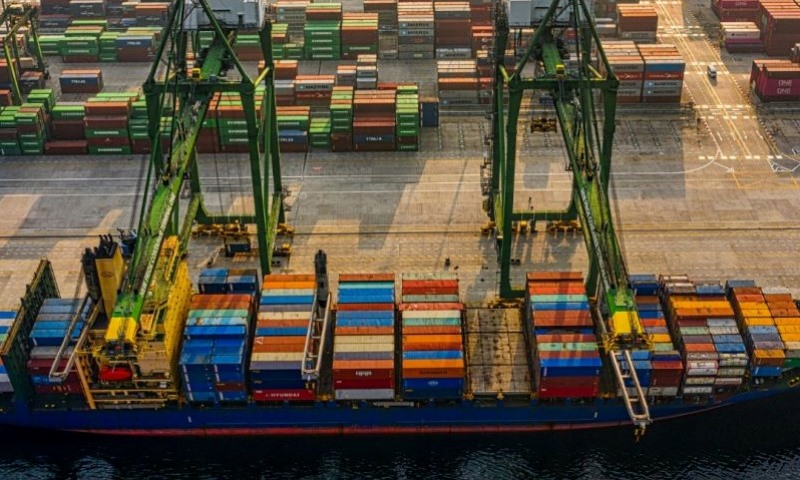
The global shipping industry is taking steps to standardise the way container stowage and lashing data is exchanged, as major classification societies and software developers join forces to improve operational efficiency and vessel approval processes. The initiative is being led through the newly launched Lashing Exchange Format (LXF) Consortium, supported by Lloyd’s Register.
The consortium aims to create a common digital standard for transferring stowage and lashing information used in container securing arrangements. At present, shipyards, class societies and lashing software providers often work with separate datasets and incompatible formats, resulting in duplicated work, inconsistent inputs and delays in approvals.
Industry stakeholders say the need for standardisation has become more urgent as container vessels continue to grow in size and cargo securing calculations become increasingly complex. The new LXF format is expected to enable all parties involved in vessel design and cargo planning to work from a unified dataset throughout the approval cycle, helping reduce inefficiencies and streamline workflows.
According to Lloyd’s Register, the consortium already represents more than half of the global market for container vessels, lashing systems and stowage arrangement development, giving the initiative strong momentum toward wider industry adoption. The standard is being developed as an open cross-industry framework rather than a proprietary system tied to a single classification society.