
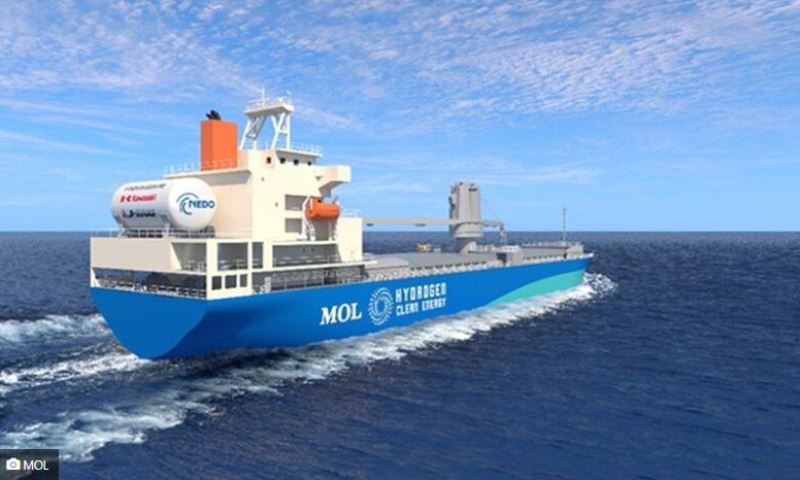
Japanese shipping major Mitsui O.S.K. Lines (MOL) has signed new agreements to expand the supply of bio-LNG fuel for its LNG-fueled car carriers across Europe, strengthening its decarbonisation strategy and advancing its goal of achieving net-zero greenhouse gas emissions by 2050.
Under the agreements, Titan, part of Molgas, will continue supplying bio-LNG in Northwest Europe, while Axpo will provide bio-LNG in the Mediterranean region. The arrangement extends MOL’s bio-LNG bunkering network to key Spanish ports, including Port of Malaga and Port of Barcelona, complementing the bio-LNG supply programme launched in Northwest Europe in March 2025.
Bio-LNG, produced primarily from biomass sources such as livestock manure and food waste, is considered an immediately deployable low-carbon marine fuel because it can utilize existing LNG infrastructure while significantly reducing lifecycle greenhouse gas emissions. The fuel supplied under the initiative is certified under the ISCC-EU sustainability framework and has a lifecycle carbon intensity of -15 g-CO₂/MJ or lower, from production through consumption.
MOL said the agreements establish a stable and continuous bio-LNG supply framework across both Northwest Europe and the Mediterranean, supporting the company’s broader environmental strategy. The shipping line views LNG-fueled vessels as a transitional pathway toward wider adoption of carbon-neutral fuels, including bio-LNG and synthetic LNG (e-methane).
As part of its long-term decarbonisation roadmap, MOL plans to further expand the geographic coverage, volumes and quality of bio-LNG usage while accelerating the development of clean-fuel supply chains. The company is also continuing investments in next-generation marine fuels such as methanol, ammonia and hydrogen, alongside the expansion of its LNG-fueled fleet, as it works toward achieving net-zero emissions by 2050.