
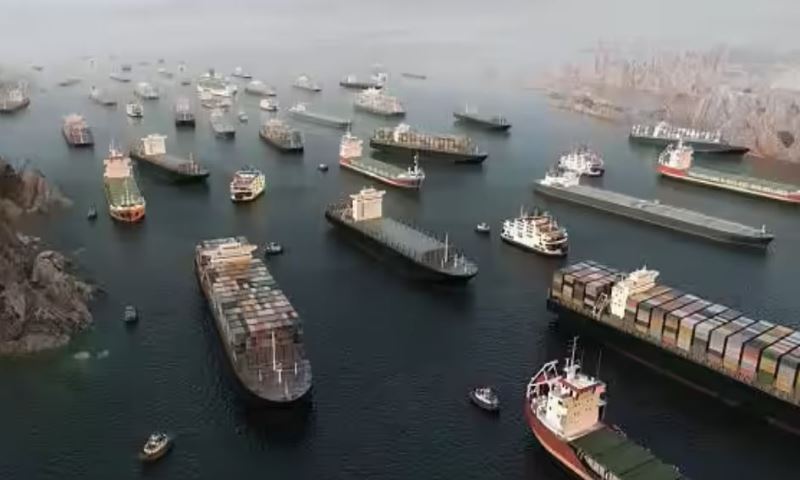
Commercial shipping activity through the Strait of Hormuz has slowed sharply once again as uncertainty surrounding the strategic waterway persists amid ongoing US-Iran negotiations in Switzerland.
American and Iranian officials met on Sunday at the Swiss resort of Burgenstock near Lake Lucerne, with delegations from Pakistan and Qatar participating as mediators. Qatari authorities later confirmed that the four-party discussions were underway.
The Strait of Hormuz, a critical chokepoint for global energy supplies through which a significant share of the world’s oil and liquefied natural gas exports transit, has returned to the spotlight after conflicting signals from Tehran regarding access to the route.
Iran’s military leadership announced on Saturday that the Strait would remain closed, citing alleged violations of the Lebanon ceasefire by Israel and claiming the United States had failed to fulfill commitments under a preliminary agreement aimed at ending regional hostilities.
The latest development has reversed a brief improvement in shipping activity following the June 18 ceasefire agreement between Washington and Tehran.
According to maritime analytics firm Windward, outbound vessel movements had shown signs of recovery on Thursday, with 19 ships, including several oil tankers, transiting the Strait. The increase had fuelled optimism that maritime trade flows were gradually stabilising after weeks of disruption.
However, vessel activity weakened significantly over the weekend following Tehran’s renewed restrictions.
Windward reported on Sunday that no AIS-recorded vessel transits were detected overnight, highlighting growing caution among shipowners and operators. The company noted that only two non-Iranian commercial vessels were visible within the Strait on Sunday morning.
Market participants are closely monitoring developments as the waterway remains a vital artery for global energy markets and international trade.
Iranian media reports suggest that any reopening of the Strait is now linked to broader diplomatic outcomes, including full compliance with the Lebanon ceasefire and easing restrictions on Iranian oil exports.
The memorandum of understanding between Washington and Tehran had extended the truce following the conflict triggered by US-Israeli strikes on Iran earlier this year. The agreement also included provisions aimed at ending hostilities between Israel and Hezbollah in Lebanon.
However, continued clashes in Lebanon have placed the fragile arrangement under pressure, raising fresh concerns over the stability of one of the world’s most important maritime trade corridors.
The renewed disruption has prompted shipping companies to maintain a cautious approach, with vessel operators closely assessing security risks and awaiting greater clarity on the outcome of diplomatic efforts before resuming normal transit patterns through the Strait of Hormuz.