
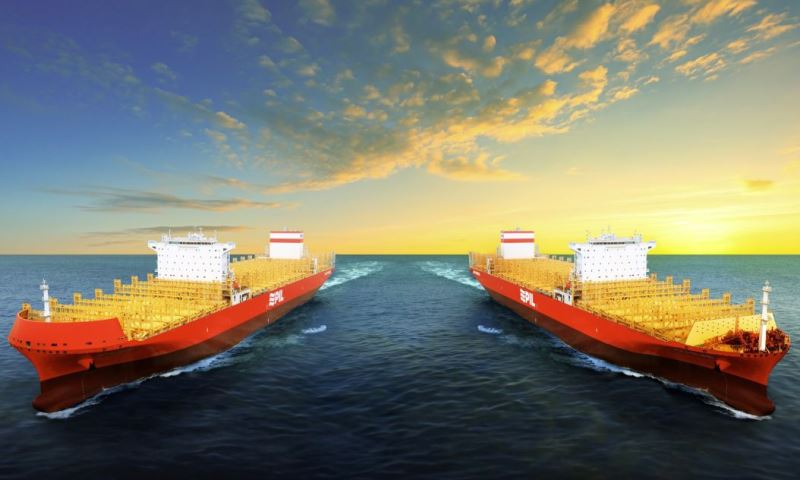
Singapore-based Pacific International Lines (PIL) has named its newest 13,000 TEU LNG dual-fuel container vessels, Kota Elok and Kota Elan, at a ceremony held at Hudong-Zhonghua Shipbuilding (Group) Co., Ltd in Shanghai, China.
Kota Elok and Kota Elan are the first vessels in a series of 13 new 13,000 TEU container ships being built for PIL. Designed to operate on both liquefied natural gas (LNG) and low-sulphur fuel oil, the vessels incorporate energy-saving technologies and digital solutions aimed at reducing fuel consumption, lowering greenhouse gas emissions and improving operational efficiency.
The naming ceremony saw Kota Elok named by Chan Wai Ching, Chief Corporate Officer of Temasek International, while Kota Elan was named by Yan Zi, an Olympic bronze medallist and Grand Slam doubles champion.
The vessels will be deployed on PIL’s Asia–South America service, supporting growing cargo demand between the two regions while enhancing network efficiency and service reliability.
Commenting on the milestone, Lars Kastrup, CEO of PIL, said the addition of the newbuildings marks a significant step in the company’s fleet modernisation programme, enabling greater capacity, improved efficiency and progress towards its long-term sustainability and net-zero objectives.