
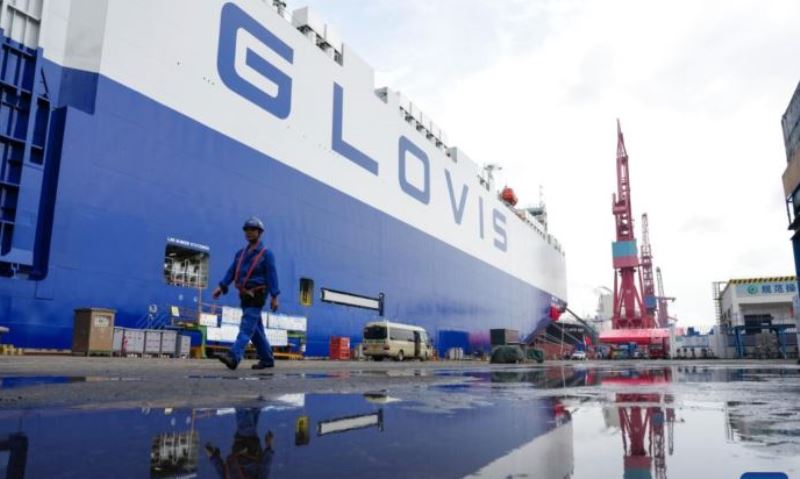
China’s rapidly expanding electric vehicle (EV) exports are driving strong demand for pure car and truck carriers (PCTCs), pushing charter rates higher as global shipping capacity struggles to keep pace with rising vehicle shipments.
The surge in overseas demand for Chinese-made EVs has significantly increased bookings for vehicle carriers, with automakers securing long-term shipping capacity to ensure reliable deliveries to key markets across Europe, Southeast Asia, Latin America and the Middle East. The sustained export momentum has tightened vessel availability, resulting in firmer charter rates for PCTCs.
Industry analysts say the growing volume of EV exports has transformed the vehicle shipping market over the past few years. Chinese manufacturers are expanding their global footprint, supported by competitive pricing, technological advancements and increasing demand for electric mobility, all of which have contributed to higher seaborne vehicle trade.
To meet the rising demand, shipping companies are investing heavily in new PCTCs, many of which are designed to operate on cleaner fuels such as liquefied natural gas (LNG), methanol-ready systems or dual-fuel engines. However, the influx of new vessels is expected to take time, leaving the market relatively tight in the near term.
Charter rates have remained resilient despite broader uncertainties in global shipping, as the vehicle carrier segment continues to benefit from robust automotive exports. Logistics providers are also expanding terminal capacity and inland distribution networks to handle the increasing flow of vehicles arriving at major import hubs.
Market participants believe the outlook for the car-carrying sector remains positive, with Chinese EV exports expected to continue supporting vessel utilization and freight earnings. While additional ship deliveries over the coming years may gradually ease capacity constraints, demand for specialized vehicle carriers is likely to remain strong as global automakers and logistics companies adapt to the accelerating transition toward electric mobility.