
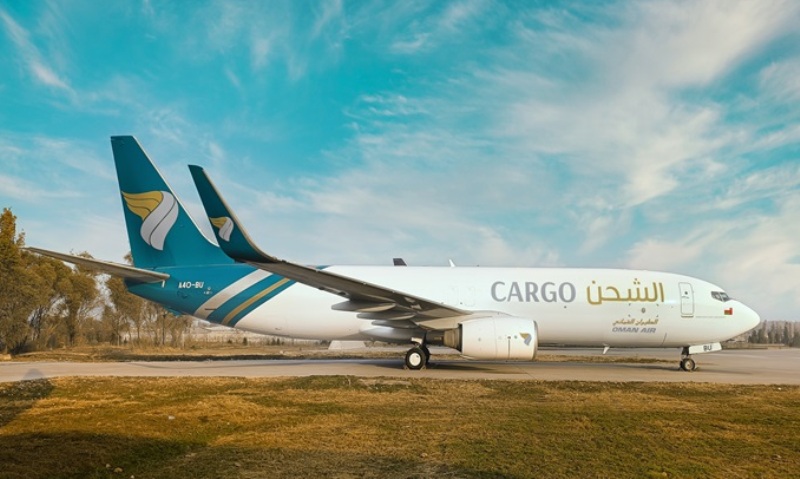
Oman Air is expected to retain its daily Muscat–Dubai Road Feeder Service (RFS) as a permanent part of its cargo network, following the service’s successful role in keeping freight moving during major airspace and airport disruptions across the Gulf.
The road feeder service was introduced in June 2026 to provide an alternative cargo connection between Muscat in Oman and Dubai in the UAE. It complements Oman Air’s airfreight operations by allowing shipments to move between the two gateways by road, providing additional flexibility when aircraft capacity or regional air routes are constrained.
RFS gains strategic importance
The service became particularly valuable during the regional conflict, when airspace restrictions and airport closures disrupted established cargo routes. Muscat emerged as an alternative air cargo hub, with additional freight flows being routed through Oman as logistics operators looked for reliable alternatives.
According to Oman Air’s Head of Cargo, Michael Duggan, some cargo flows that shifted to Muscat during the disruption have continued even after other regional hubs reopened. The continuing uncertainty has also encouraged some companies to regard Muscat as a dependable supply-chain hub.
Wider range of cargo
The daily RFS handles perishables, general cargo and shipments that cannot be accommodated on narrow-body passenger aircraft. This provides Oman Air with an additional option for handling cargo volumes that exceed available belly capacity.
The road connection also supports the movement of larger consignments while maintaining connectivity between Oman and the UAE’s major air cargo infrastructure.
Muscat strengthens as a cargo gateway
The decision to retain the service reflects Oman Air’s broader effort to strengthen Muscat’s role as a regional logistics and cargo hub. The carrier has been assessing how changing supply-chain patterns could create longer-term opportunities for Oman following the disruption.
Oman Air is also examining additional narrow-body freighter capacity for important cargo markets such as Mumbai and Dhaka, while wide-body passenger aircraft have been deployed on some services to increase available cargo capacity.
Regional logistics network evolves
The continued operation of the Muscat–Dubai RFS highlights the growing importance of combined air-road logistics solutions in the Gulf. Such connections allow carriers and forwarders to maintain cargo flows when air capacity is limited or when geopolitical developments disrupt established routes.
For shippers, the service provides an additional transportation option between two important Gulf gateways and improves resilience against future disruptions.
Oman Air’s decision to retain the road feeder therefore signals that the service has evolved beyond a temporary contingency measure into a potentially permanent component of its cargo network, supporting more flexible and resilient freight movement across the region.