
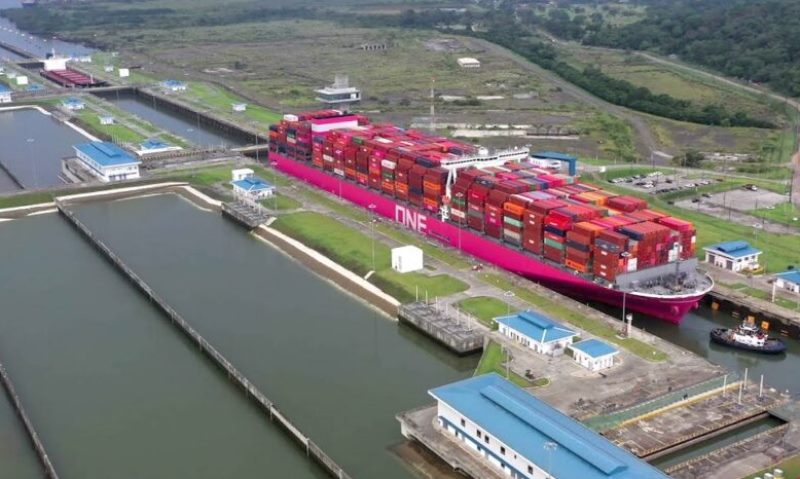
The Panama Canal Authority is set to reduce daily vessel traffic from September as worsening drought conditions and the threat of a stronger El Niño raise concerns over water availability at the strategic waterway.
Daily transit capacity will fall from the current 36 vessels to 34 from September 4, before being reduced further to 32 ships per day from September 15. The restrictions will apply to both Panamax and Neopanamax locks.
The decision follows a significant decline in rainfall across the canal watershed. Rainfall between May and August was 34% below the historical average, while water inflows were down 44%, according to the Panama Canal Authority.
The canal depends on freshwater from its surrounding reservoirs to operate its lock system. Lower water availability limits the number of vessels that can pass through and can also restrict the amount of cargo ships are able to carry.
Under the new measures, Neopanamax locks will have nine daily transit slots from early September, while Panamax capacity will initially stand at 25 slots before falling to 23 from September 15. The authority has also warned that additional restrictions could be introduced if rainfall remains below normal.
The restrictions could create delays and higher logistics costs for shipping lines and cargo owners that depend on the canal for trade between the Atlantic and Pacific oceans. The waterway is particularly important for container, LNG, dry bulk and other commodity trades.
The latest move comes after severe drought forced the canal to impose major transit restrictions in 2023 and 2024. Authorities have since introduced water-conservation measures and are pursuing longer-term solutions to strengthen the canal’s water supply.
With El Niño expected to strengthen during the coming months, shipping companies are preparing for the possibility of further capacity reductions, making water availability an increasingly important factor for global maritime trade.