
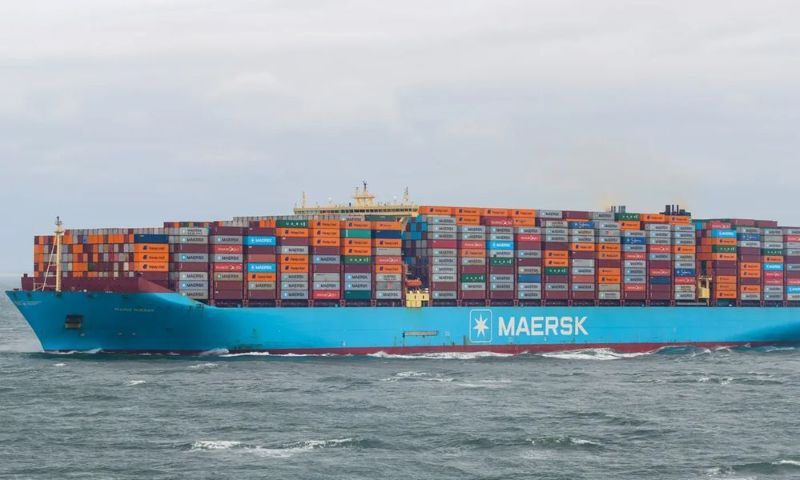
Maersk has rerouted cargo following weather-related disruptions that forced vessels to omit scheduled calls at Shanghai, as the carrier works to minimise delays across its Asia-Pacific services.
The latest disruption affected vessels on Maersk’s Northern Star service, with SEASPAN GUAYAQUIL 627N/632S and AS CALIFORNIA 628N/633S skipping their scheduled Shanghai port calls because of adverse weather conditions affecting regional schedules.
Maersk said the omissions were intended to minimise further disruption to the vessels’ onward schedules. Cargo that had been planned for loading or discharge at Shanghai has consequently been assigned alternative routing arrangements, with customers advised to follow revised estimated departure and arrival information.
The latest move follows a series of weather-related disruptions affecting Shanghai and other major Chinese ports in recent weeks. Earlier, Maersk also adjusted its Dragon service, with ALS KRONOS and METHONI omitting Shanghai and affected cargo being routed through Hong Kong for onward connections.
Maersk has used similar contingency measures during previous weather events. In July, the carrier diverted Shanghai cargo through Xiamen after MAERSK NINGBO omitted Shanghai, with cargo transferred to another vessel for onward connections.
The disruptions underline the vulnerability of Asia-Pacific liner schedules to severe weather. Port closures and vessel delays can quickly affect berth windows, transshipment connections and inland delivery schedules, forcing carriers to make temporary changes to port rotations.
For shippers, the Shanghai omissions could result in revised transit times and additional handling as cargo moves through alternative gateways. Maersk’s contingency arrangements are designed to maintain cargo flows while limiting the impact on the wider service schedule.
Shanghai is one of the world’s largest container gateways and a major export hub for Chinese manufactured goods. Disruptions at the port can therefore have implications well beyond individual vessel schedules, particularly when cargo must be redirected through alternative Chinese or regional gateways.
Maersk continues to advise affected customers to monitor revised sailing information and coordinate with its customer service teams regarding individual shipments. The carrier’s latest contingency measures are intended to restore schedule reliability while weather conditions and port operations stabilise.
The repeated use of port omissions and alternative routings highlights how carriers are increasingly relying on flexible network planning and contingency routing to manage weather-related disruptions without allowing delays to cascade across entire service loops.