
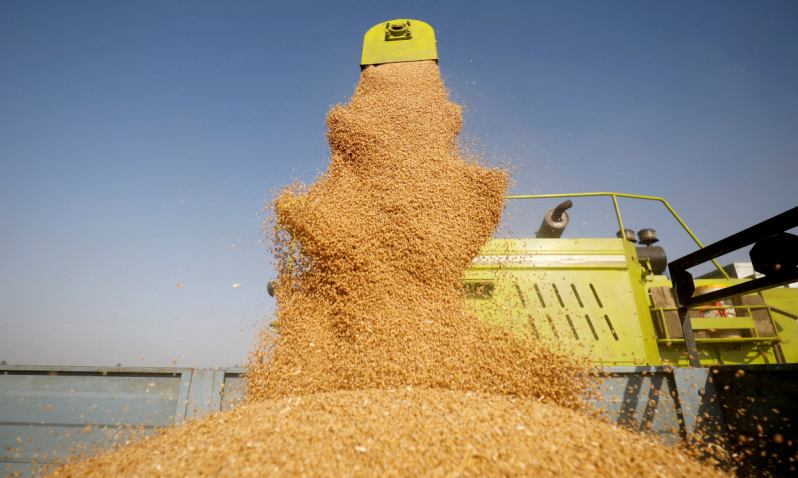
India could unlock more than $1.5 billion in wheat export opportunities as record production, high government stocks and the recent relaxation of export restrictions create favourable conditions for expanding overseas shipments, according to an analysis by the Associated Chambers of Commerce and Industry of India (ASSOCHAM).
India produced a record 121 million tonnes (MMT) of wheat in 2025-26, compared with estimated domestic consumption of around 111 MMT. This has created a sizeable surplus that could support higher exports without immediately putting pressure on domestic availability. As of May 28, 2026, wheat stocks in the Central Pool stood at 51.3 MMT, substantially above the prescribed buffer norm of 27.5 MMT for July 1.
The export opportunity has been strengthened by the government’s recent policy shift. In August, India moved specified wheat and wheat flour products from the “Prohibited” to “Free” export category, providing exporters with greater flexibility to access international markets.
ASSOCHAM’s assessment comes at a time when global wheat markets are expected to face tighter supply conditions. The US Department of Agriculture has projected global wheat production to decline from a record 844 MMT in 2025-26 to about 819 MMT in 2026-27, with production declines expected among several major exporting countries, including the US, European Union, Argentina and Australia.
India also has a potential price advantage in international markets. The report cited wheat’s minimum support price at around $268 per tonne, compared with an international wheat price of approximately $303 per tonne in May 2026. This price differential could improve the competitiveness of Indian wheat in price-sensitive markets, although freight, quality specifications and destination-country regulations will influence the final landed cost.
Key export markets
ASSOCHAM identified Egypt, Indonesia, Bangladesh, Algeria and the Philippines as markets offering strong prospects for Indian wheat and related products. Bangladesh, in particular, is already showing strong demand for Indian wheat following the easing of export restrictions.
The opportunity extends beyond bulk wheat shipments. The liberalisation also covers specified wheat flour and related products, including atta, maida and semolina, creating scope for greater exports of value-added products alongside raw grain.
The government had already taken steps earlier in 2026 to permit limited wheat exports. In February, India authorised exports of 2.5 million tonnes of wheat, along with an additional 500,000 tonnes of wheat products, signalling a gradual easing of restrictions before the broader policy change in August.
For Indian farmers, millers, traders and exporters, the combination of surplus stocks, competitive pricing and stronger international demand could provide an important opportunity to increase India’s presence in global wheat trade. However, sustained export growth will depend on maintaining adequate domestic supplies, monitoring food inflation and ensuring that export commitments remain aligned with domestic consumption requirements.
If market conditions remain favourable, the new policy environment could allow India to convert its current wheat surplus into a significant export opportunity while strengthening its position as a reliable supplier to major wheat-importing markets.