
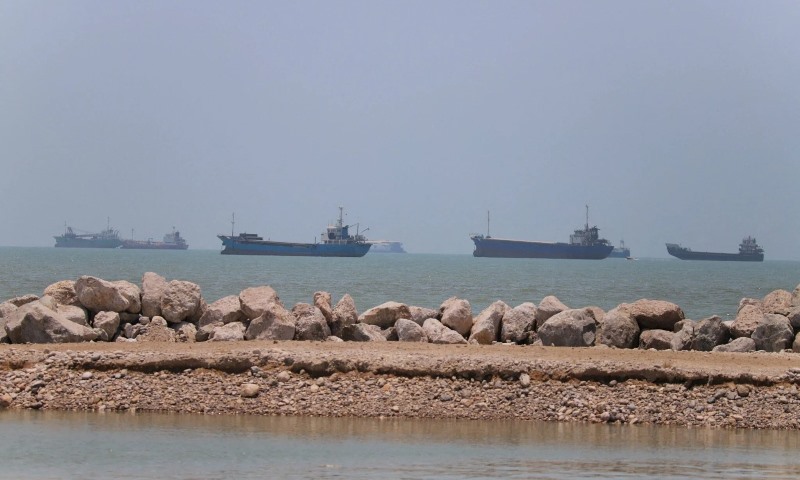
Two container ships have sunk near the Strait of Hormuz following missile or projectile strikes, amid a sharp escalation in attacks on commercial shipping in the region, raising fresh concerns over the security of one of the world’s most critical maritime trade routes.
The Singapore-flagged GFS Pride sank on Wednesday after an attack the previous day, while the Antigua and Barbuda-flagged Cape Dao sank hours later near the strait. According to information reported to the International Maritime Organization (IMO), the Cape Dao had been struck by a projectile on September 23.
The incidents come amid an intensification of attacks on vessels around the Strait of Hormuz, with the United Kingdom Maritime Trade Operations (UKMTO) reporting at least five incidents, including drone strikes, targeting tankers and other commercial ships in the preceding 48 hours.
“There is a tempo increase in strikes, which looks deliberate,” a maritime security source said, highlighting concerns over the apparent escalation in attacks.
Conflicting Accounts Over Ship Sinking
Iran has offered a different explanation for the sinking of the GFS Pride. Iranian state television, citing a statement from the Islamic Revolutionary Guard Corps (IRGC), said the cargo ship struck a naval mine while attempting to transit the strait through what Tehran described as an unauthorised route.
The IRGC claimed the vessel was travelling along an “illegal and dangerous route”. Television footage reportedly showed the ship listing in the water and emitting a thick plume of smoke. The broadcast said the vessel was carrying approximately 2,500 containers.
However, UKMTO indicated that both ships had been struck by unidentified projectiles, leaving the circumstances surrounding the incidents disputed.
Iran has repeatedly warned vessels against transiting the Strait of Hormuz without its approval. Meanwhile, the US military has been guiding ships through a route closer to the Omani coast amid continuing tensions in the region.
Attacks on Shipping Gather Pace
The latest sinkings follow a series of attacks on commercial vessels in recent days. UKMTO monitoring indicated that six vessels were attacked on Sunday alone.
An analysis by the Financial Times found that 24 ships had been hit in the two weeks leading up to October 11. The affected vessels included three refined petroleum product tankers and two crude oil tankers, underscoring the potential implications for global energy transportation.
The escalation appears to have contributed to a significant decline in oil shipments through the strait, intensifying concerns about disruptions to global energy supplies and maritime trade.
Iran’s New Tactics Raise Security Concerns
According to two Iranian officials cited by Reuters, Tehran has recently adopted new tactics against vessels it considers to be violating its restrictions. The changes reportedly involve both the types and frequency of attacks and are intended, in part, to influence the political consequences of the conflict in the United States ahead of the November 3 midterm elections.
“The aim is to frustrate efforts by the United States and its allies to bring down global oil prices,” one of the officials told Reuters.
The officials said the decision to change strategy had been taken at the highest levels of Iran’s leadership and coordinated across the country’s ruling establishment.
A US military official, speaking anonymously, confirmed that Iran had changed its tactics in one significant respect. Following US strikes that destroyed much of Iran’s radar capability, the IRGC had reportedly begun deploying unarmed observers in small boats to identify potential targets, including US naval vessels.
In a previously unreported incident last week, the US military identified Iranian spotters operating from a traditional dhow and relaying target information to the IRGC, the official said. US forces confronted the vessel, instructed its occupants to abandon ship and subsequently destroyed it. No casualties were reported.
Global Energy and Trade Implications
The Strait of Hormuz is a critical artery for international energy shipments, and any sustained disruption could have far-reaching consequences for oil markets, shipping operations and global supply chains.
The intensifying attacks have heightened concerns over the safety of merchant vessels, the availability of secure transit routes and the potential for further disruption to tanker movements. The situation also adds uncertainty for shipowners, cargo interests, insurers and logistics operators navigating the region.
With tensions continuing to rise, the security of commercial shipping through the Strait of Hormuz remains a major concern for the global maritime industry.