
The global containership orderbook-to-fleet ratio has climbed above 45%, driven by a fresh wave of newbuilding activity from major carriers including Maersk and CMA CGM.
The latest increase follows reports that Maersk is preparing a major newbuilding programme that could include as many as 40 large containerships. Industry analysts have reported potential orders spanning vessels of around 18,600 TEU, 19,000 TEU and 24,000 TEU, although some of the reported orders remain unconfirmed.
Linerlytica estimates that Maersk already has around 1.5 million TEU of capacity on order, equivalent to about 32% of its existing fleet. Alphaliner has suggested that a potential 40-ship programme could add another 840,000 TEU, taking Maersk’s orderbook to about 2.05 million TEU.
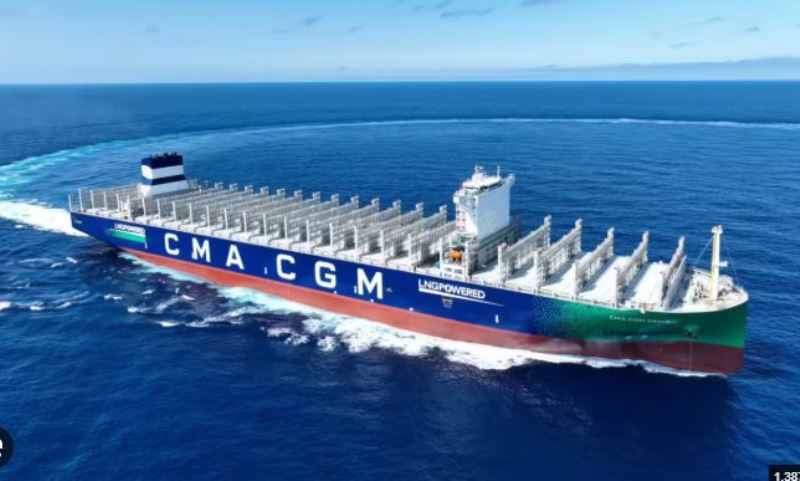
CMA CGM is also expanding its newbuilding pipeline. The carrier has continued placing orders for large containerships, including vessels in the 6,000-TEU-plus segment, while industry reports have linked it to potential orders for additional ultra-large ships.
The surge in newbuilding activity reflects carriers’ efforts to renew fleets, secure future capacity and deploy more fuel-efficient vessels. Maersk has previously ordered LNG dual-fuel and methanol-capable ships as part of its fleet renewal strategy.
The expansion comes despite concerns over future vessel oversupply. The containership orderbook-to-fleet ratio had already reached almost 42% in August, a new high at the time, according to Linerlytica data reported by The Loadstar.
Large numbers of vessels scheduled for delivery over the coming years could add substantial capacity to global liner networks. The effect on freight markets will depend on cargo demand, fleet retirement, vessel deployment and how carriers manage capacity growth.
The latest ordering activity therefore points to continued fleet expansion among leading container lines, while also highlighting the industry’s challenge of balancing new capacity with future trade growth.