
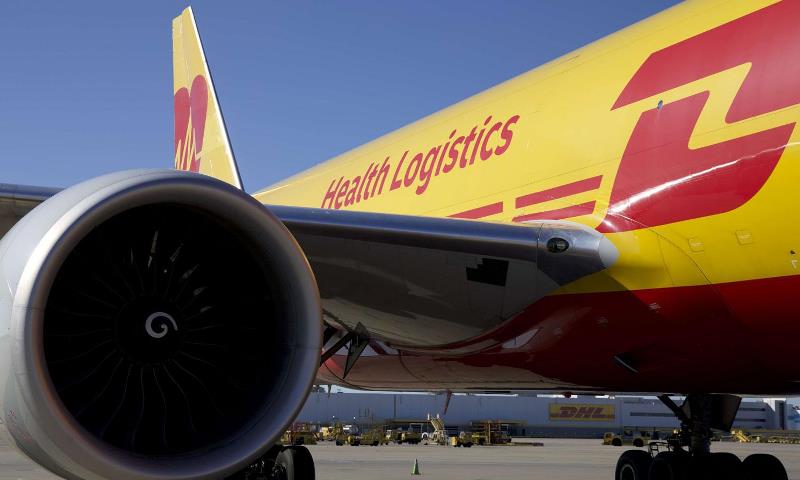
DHL Global Forwarding has expanded its Health Logistics Cold Chain Network with six new dedicated air cargo corridors connecting Europe and North America with major healthcare and pharmaceutical hubs across Asia. The expansion aims to improve the reliability of temperature-controlled shipments and strengthen international pharmaceutical supply chains.
Announced on October 12, 2026, the new corridors connect Liège and Brussels in Europe with Shanghai and Singapore, while Cincinnati in the United States will be linked to Singapore, Tokyo Narita and Seoul Incheon.
The six routes are Liège–Shanghai, Brussels–Shanghai, Brussels–Singapore, Cincinnati–Singapore, Cincinnati–Tokyo Narita and Cincinnati–Seoul Incheon.
According to DHL, the additional corridors will provide pharmaceutical customers with greater routing flexibility, access to dedicated temperature-controlled air freight capacity and more consistent transit performance. The network is designed to reduce supply chain risks and protect the quality of sensitive healthcare products throughout transportation.
The services will support shipments of pharmaceuticals, biologics, vaccines, clinical trial materials and other temperature-sensitive medical products. Most flights will operate through DHL’s dedicated network, reducing cargo handovers and giving the company greater control over shipment handling.
DHL will deploy Boeing 777 freighters equipped with three cargo compartments offering different temperature settings to meet varying shipment requirements. Specialised thermal blankets and validated handling procedures will also help limit exposure to temperatures outside the required range during cargo transfers.
The new corridors further strengthen Singapore’s position as a key gateway in DHL’s global healthcare logistics network. The company is also developing a dedicated cold-chain facility at Singapore’s Changi Airport to expand temperature-controlled storage and handling capabilities.
The expansion follows DHL’s broader strategy to build an integrated global cold-chain network amid rising demand for reliable transportation of high-value medicines and other sensitive healthcare products.
By strengthening direct connections between pharmaceutical production, research and distribution centres, DHL aims to improve supply chain resilience and support the safe, efficient movement of critical healthcare cargo across international markets.