
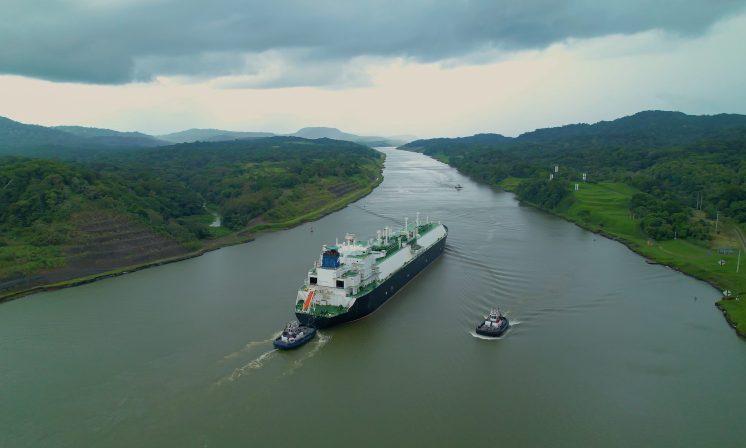
Facing multi-million dollar queue-jump auction fees, severe draft restrictions, and structurally higher toll rates, energy firms and shippers are rewriting the playbook for moving Liquefied Petroleum Gas (LPG) from the United States to Asian markets.
In response to the mounting costs and chronic bottlenecks plaguing the Isthmus, a nascent ship-to-ship (STS) shuttle trade is taking shape, altering how global gas traders manage transatlantic and transpacific supply chains.
Key Operational Shifts
-
The Toll and Auction Burden: Standard Neopanamax transit slots have faced immense pricing pressure, with last-minute queue-jumping auction bids frequently scaling past the multi-million-dollar mark amid lingering water conservation constraints.
-
The Shuttle Concept: Rather than sending Very Large Gas Carriers (VLGCs) through the canal—incurring heavy toll and priority fees—operators are increasingly utilizing regional hub configurations and ship-to-ship transfer points.
-
Asset Optimization: Exporters are pairing smaller regional vessels to feed regional hubs, preserving larger ocean-crossing tonnage for optimized, uninterrupted routes.
Bypassing the Bottleneck
For years, the Panama Canal served as the essential shortcut for US Gulf Coast propane and butane exports heading toward lucrative markets in China, Japan, and South Korea. However, a combination of climate-induced draft adjustments by the Panama Canal Authority (ACP) and fierce bidding wars for transit slots has drastically inflated voyage expenses.
With premium auction slots touching record highs near $4.6 million, charterers find traditional spot arbitrage economics increasingly unworkable. This environment has forced logistics planners to look at creative alternatives, giving rise to transshipment hubs where cargoes are consolidated or transferred offshore to mitigate total per-tonne transit overhead.
“When auction prices for a single transit slot scale into millions of dollars, the traditional math breaks down,” notes a senior energy shipping analyst. “Operators are no longer just booking passage; they are building entire operational contingencies around avoiding the bottleneck altogether.”
Market Implications
The rise of the LPG shuttle trade is introducing new dynamics to global freight rates. While it adds operational complexity—requiring precise scheduling coordination for offshore transfers—it provides major exporters with a vital buffer against unpredictable canal tariffs.
As long as Panama Canal transit volatility and capacity restrictions persist, industry experts expect this innovative shuttle model to transition from an ad-hoc workaround into a permanent fixture of the global energy transport toolkit.