
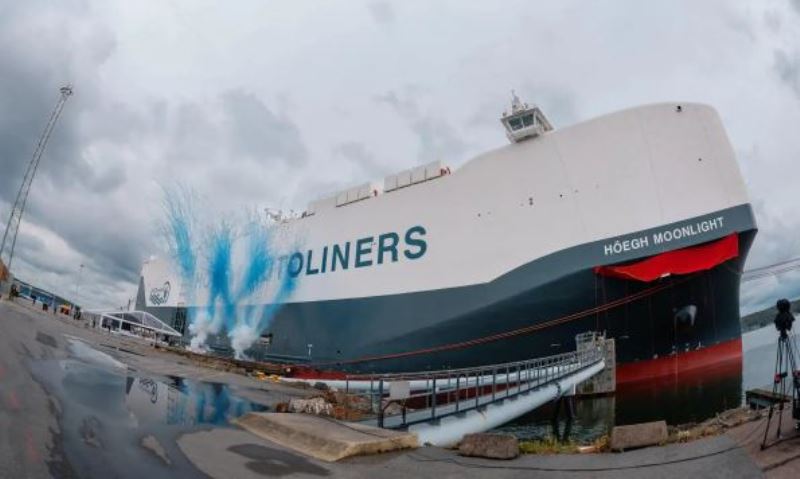
Norwegian car carrier giant Höegh Autoliners reported a net profit after tax of $86 million for the second quarter, demonstrating strong operational resilience even as surging bunker prices and geopolitical trade disruptions squeezed margins.
The latest financial results reflect a decrease from the $103 million posted in the first quarter and $123 million during the same period last year. However, underlying demand for roll-on/roll-off (RoRo) shipping remained robust, driven heavily by expanding vehicle exports from Asia.
Key Financial Highlights
-
Revenue: Rose to $376 million, up from $360 million in the previous quarter.
-
EBITDA: Dropped to $122 million, compared to $145 million in Q1, primarily impacted by elevated voyage, charter-hire, and bunker fuel expenses.
-
Cargo Volumes: Reached 4.0 million cubic metres, marking a 2.6% increase quarter-on-quarter.
-
Shareholder Returns: Declared a dividend of $16 million ($0.0839 per share) for the quarter.
Navigating Fuel Headwinds and Rerouting
Management pointed to a combination of geopolitical friction in the Middle East and spiking global fuel prices as the primary drivers behind the quarterly earnings contraction. The bunker index price surged during the quarter, creating a temporary net negative fuel impact.
Because Höegh Autoliners utilizes a standard Bunker Adjustment Factor (BAF) recovery mechanism—which carries a typical five-to-six-month lag—the full financial compensation for the fuel spikes has yet to hit the ledger. Company executives expect these contractual recovery mechanisms to catch up fully in the upcoming third quarter.
“Q2 was impacted by geopolitical disruption that increased fuel costs and operational complexity across our network,” said CEO Andreas Enger. “Despite these challenges, we maintained reliable service offerings and found bespoke solutions for affected cargo together with our customers.”
Market Outlook
Looking forward, Höegh Autoliners anticipates third-quarter EBITDA to remain steady in line with Q2 performance. Persistent tightness in global vessel capacity—compounded by robust Chinese vehicle exports—continues to support favorable freight rates across the company’s global network.