
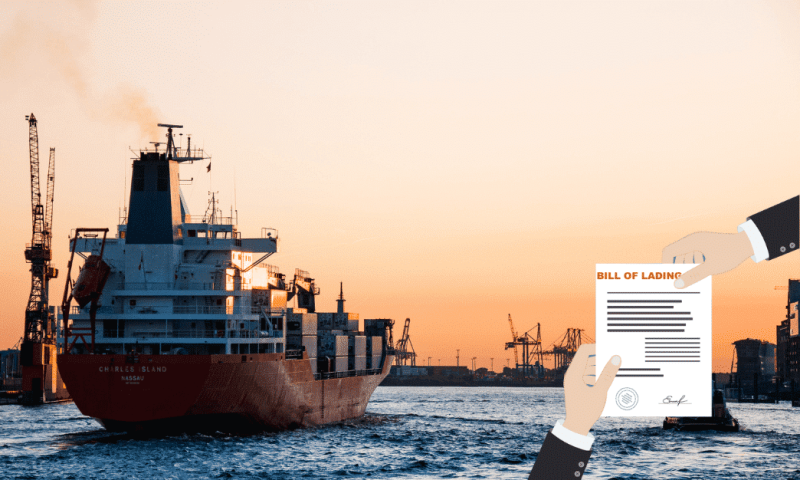
India and South Korea have begun electronically transferring bills of lading between their customs authorities, a decision that is expected to simplify business operations between the two countries, a senior official announced on Thursday.
A bill of lading is a crucial document that functions as a receipt, contract, and proof of ownership for shipped goods, ensuring the safe movement of commodities through international trade.
Director General of Foreign Trade, Santosh Kumar Sarangi, emphasized that as this electronic system becomes globally standardized, the need for physical document submission will be eliminated. ‘India, in collaboration with South Korea, has now started sharing the bill of lading electronically between the customs authorities of both nations,’ he said at the ‘Deloitte Government Summit.’ South Korea, a vital trading partner for India, has implemented a comprehensive free trade agreement with India since 2010. India’s exports to South Korea accumulated to USD 6.41 billion in 2022-23, while imports were valued at USD 21.13 billion during the same period.
Sarangi predicted that the complete transition from physical to electronic documentation could happen in the next 1 to 1.5 years. The United Nations Commission on International Trade Law (UNCITRAL) is spearheading this initiative to ensure all trade documentations are electronically transferred. UNCITRAL, the UN’s core legal body for international trade law, focuses on modernizing and harmonizing trade rules globally. Sarangi also noted the contributions of startups in real-time tracking of goods and containers. He mentioned that all incoming containers are RFID tagged, with their movements tracked through IoT technologies from origin to shipment and beyond.
The DGFT has implemented several measures to improve business ease for exporters and importers, including launching the Trade Connect e-Platform, which serves as a comprehensive resource for traders seeking information on duties, markets, and free trade agreements.