
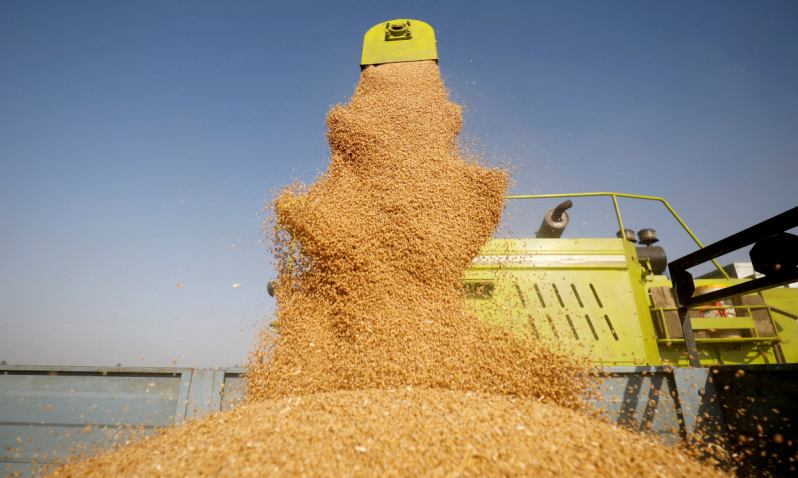
After nearly four years, India has officially lifted its ban on wheat exports, reopening trade channels for international buyers and raising expectations of renewed activity at key land ports such as Hili.
The Government of India issued a notification on 14 February formalising the removal of the restriction, which had originally been imposed on 13 May 2022 to curb rising domestic wheat prices and safeguard food security.
Confirming the development, Dinesh Poddar, a prominent importer at the Hili land port, said the export ban was officially withdrawn on 13 February. However, he noted that immediate imports may not begin right away due to current price dynamics. “Wheat imported from Ukraine and Russia is presently available at lower prices, while domestic prices in India remain comparatively higher. Therefore, imports from India may not resume immediately,” he said.
According to Poddar, the situation is likely to change with the arrival of the new harvest. As fresh stocks enter the Indian market in the coming weeks, prices are expected to ease, potentially making Indian wheat more competitive. “Once new crop supplies reach the market, prices should stabilise. That will create an opportunity to import wheat at more affordable rates and distribute it domestically at reasonable prices,” he added.
The decision is expected to significantly influence regional trade flows, particularly across South Asia, where Indian wheat is widely preferred for its consistent quality and reliable supply. Analysts believe the move could provide a timely supply boost to neighbouring countries that rely heavily on wheat imports to meet domestic demand.
The lifting of the ban also reflects a calibrated shift in India’s trade policy—balancing domestic market stability with the benefits of participating in global commerce. With regulatory barriers removed, importers and traders are now preparing to capitalise on the anticipated availability of competitively priced Indian wheat.
For Hili port and other major entry points, the development presents both opportunity and operational challenges. Authorities and stakeholders may need to strengthen logistics coordination, storage infrastructure, and handling capacity to manage the expected increase in grain inflows once trade resumes in full swing.