
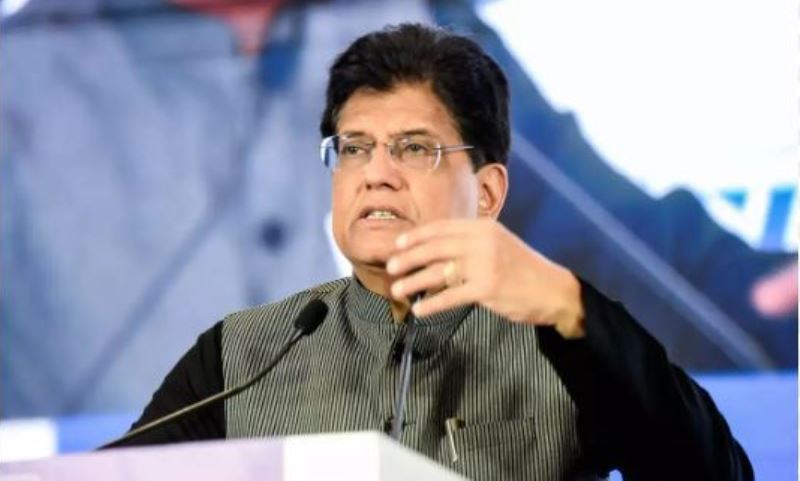
India’s exports grew by around 15% during the April–July period of the current financial year, providing fresh momentum to the government’s ambitious target of achieving $1 trillion in total exports in FY2026–27. Commerce and Industry Minister Piyush Goyal expressed confidence that the target remains achievable despite continued global economic uncertainty and geopolitical disruptions.
Speaking at the Bharatiya Vyapar Mahotsav 2026 in New Delhi on August 12, Goyal said the strong export performance during the first four months of the fiscal year demonstrates India’s growing competitiveness in international markets. He urged Indian businesses to expand their scale, improve product quality and make greater use of opportunities created by free trade agreements.
Exports gain momentum
India recorded total exports of $863 billion in FY2025–26, comprising approximately $442 billion in merchandise exports and $421 billion in services exports. Goyal said exports have increased by about 73% over the past six years, reflecting the country’s expanding presence across global markets.
The latest 15% growth in the April–July period strengthens the government’s expectation that exports can accelerate further during the remainder of FY2026–27.
$1 trillion target remains in focus
The government has set a target of $1 trillion in exports for the current fiscal year. To achieve it, India needs sustained growth across both merchandise and services exports.
Earlier, Goyal said merchandise exports would need to rise from about $442 billion to nearly $530 billion, while services exports would need to reach approximately $470 billion. This would require merchandise export growth of around 16–17% and services growth of about 11%.
Goyal has described the $1 trillion goal as ambitious but achievable, particularly if Indian exporters improve scale and competitiveness and take advantage of preferential market access.
Wider market access
India’s expanding network of free trade agreements is expected to play an important role in achieving the target. Goyal said India now has preferential access to around $25 trillion of international trade following the expansion of its FTA network. He also highlighted agreements with developed economies as an important avenue for Indian companies seeking to increase overseas sales.
The government is encouraging exporters to use these agreements more effectively by identifying products with strong overseas demand and improving their ability to compete on price, quality and delivery reliability.
Global challenges remain
The export growth comes despite an uncertain international trade environment, including geopolitical conflicts, changing tariff policies and disruptions to global supply chains. Strong performance during the first four months therefore provides some confidence that Indian exporters are becoming more resilient to external shocks.
However, sustaining the current pace will remain critical. India will need continued growth in merchandise shipments alongside expansion in services exports to close the gap between the previous year’s $863 billion total and the $1 trillion target.
With exports already showing double-digit growth in the opening months of FY2026–27, the government believes India has built sufficient momentum to pursue the ambitious milestone. The performance of key export sectors, new trade agreements and global demand conditions will determine whether the country can convert that momentum into a record-breaking year.