
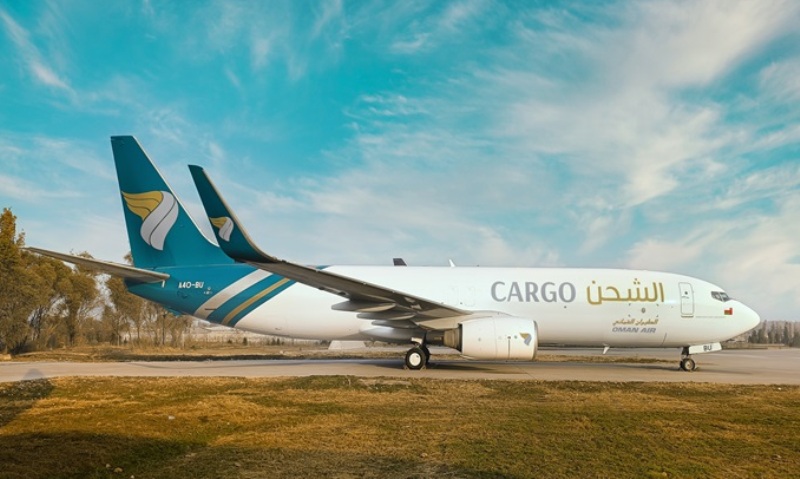
Oman Air Cargo is exploring partnerships with other airlines as it considers ways to expand its freighter capability and strengthen its position in the regional and international air cargo market.
The carrier has identified freighter options as part of its 2026 cargo strategy, with the initiative still at an exploratory stage. The plan is aimed at increasing cargo capacity beyond the bellyhold space available on Oman Air’s passenger fleet.
Oman Air has traditionally operated a largely bellyhold-driven cargo model, using passenger aircraft to carry freight across its network. The airline is now examining a more diversified capacity model that could include dedicated freighter operations through partnerships.
Partnerships could support freighter expansion
Rather than immediately committing to a standalone freighter fleet, Oman Air is looking at potential airline partnerships that could provide access to dedicated cargo capacity. Such arrangements could allow the carrier to expand its cargo offering while limiting the investment and operational requirements associated with establishing its own freighter operation.
Oman Air already maintains an extensive network of cargo partnerships and interline arrangements. Its current cargo network connects Muscat with destinations across the Gulf, Indian subcontinent, Southeast Asia, Africa and Europe, while partner carriers extend its reach to additional markets.
Muscat gains importance as cargo hub
The freighter initiative comes as Muscat has gained greater importance as an alternative cargo gateway in the Gulf. Disruptions elsewhere in the region during 2026 increased cargo flows through Oman and highlighted the value of Muscat International Airport as a logistics hub.
Oman Air also introduced a daily road feeder service between Muscat and Dubai during the regional disruption, helping maintain cargo connectivity when other Gulf gateways faced operational challenges. Some of the additional cargo flows through Muscat have remained even after traffic began returning to traditional routes.
The carrier is also looking to strengthen connections along key east-west trade corridors, particularly between the Far East, Southeast Asia, the Indian subcontinent and Europe. Network expansion and product development are central elements of its cargo growth strategy.
Focus on capacity and specialised cargo
Oman Air Cargo has said it wants to increase capacity while continuing to develop specialised cargo products. Its existing network includes important cargo markets such as India, the Gulf, Europe and Southeast Asia, giving the carrier a broad base from which to develop additional freight services.
The airline’s cargo business also supports digital processes such as electronic air waybills, while its partner network provides additional connectivity beyond Oman Air’s own destinations.
A dedicated freighter capability, whether developed independently or through partnerships, could give Oman Air greater flexibility in serving markets where passenger belly capacity is insufficient. It could also enable the airline to respond more quickly to seasonal demand, charter requirements and changes in regional cargo flows.
For now, the freighter initiative remains under evaluation. However, the search for airline partners signals Oman Air’s intention to make cargo a more significant component of its overall business and to leverage Muscat’s strategic location between major markets in Asia, the Middle East and Europe.