
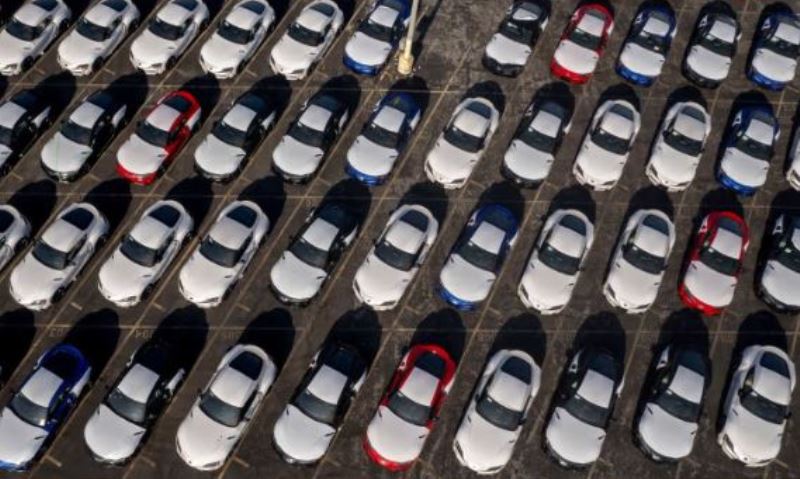
India’s automobile sector continues to drive the country’s economic progress, emerging as a key pillar of manufacturing and exports.
According to industry data for the financial year 2024–25, the auto sector now contributes around 7.1 per cent to India’s GDP and an impressive 49 per cent to the manufacturing GDP.
The sector has also become a major source of employment, supporting over 3.7 crore jobs across the country. Additionally, it accounts for nearly 8 per cent of India’s total exports, highlighting its growing global presence.
With expanding production capacity and rising demand, India is now the third-largest automobile market by sales and fourth-largest by production globally.
In FY25 alone, India produced over 31 million vehicles. This included more than 5 million passenger cars, 1 million commercial vehicles, 1 million three-wheelers, and nearly 24 million two-wheelers.
Of these, around 5.7 million vehicles were exported to countries like Japan, Mexico, Latin America, and Africa, marking a steady rise in international demand.
The surge in production and exports is supported by a favourable policy environment that encourages domestic manufacturing, sustainable mobility, and integration with global supply chains.
A significant initiative in this direction is the Production Linked Incentive (PLI) scheme for the automobile and auto components sector, with a total outlay of Rs 25,938 crore.
The PLI scheme aims to promote advanced automotive technologies such as electric vehicles (EVs), hydrogen-powered engines, and autonomous systems.
This not only strengthens India’s capabilities in futuristic mobility solutions but also enhances its position as a hub for global auto manufacturing and innovation.
As India moves steadily towards becoming a USD 5 trillion economy, the automotive sector stands out as a crucial growth engine propelling the country forward.