
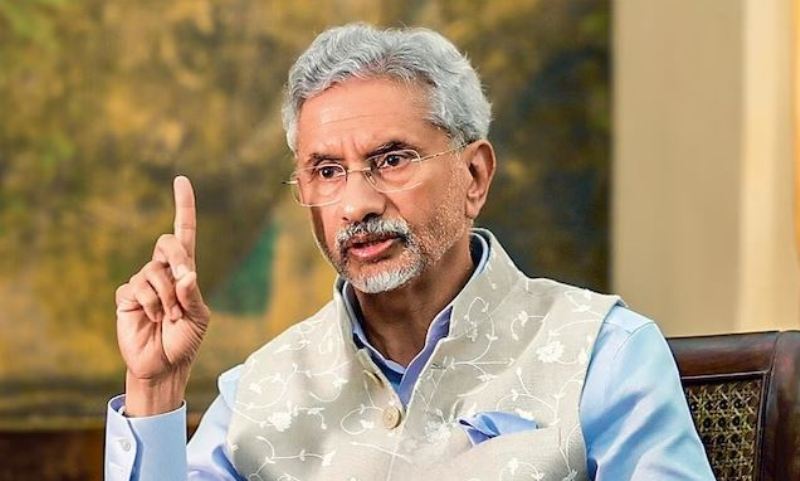
India will put its own interests first in future trade deals, External Affairs Minister S. Jaishankar said. Stressing that free trade agreements (FTAs) are no longer just economic tools but strategic choices, he said, “Introducing an overall balance by engaging the Gulf and Western economies has not just economic logic, but a strategic one as well.”
As global uncertainties grow, India is recalibrating how and where it partners, with a sharper eye on long-term payoffs, sensitive technologies, and untapped potential.
The minister underscored the rising strategic relevance of trade agreements in India’s global playbook. “Trade agreements have always occupied a salient position when it comes to global economic engagement. This is even more so now, a reality that India must recognize,” he said.
Experts feel Jaishankar’s remarks are a calibrated signal ahead of a possible US trade announcement. By linking trade deals to access to sensitive technologies, he appears to be preparing domestic audience for what’s at stake. The message: these agreements are not concessions, they’re strategic leverage.
India is currently negotiating three major agreements—FTAs with the European Union and the United Kingdom, and a bilateral trade agreement (BTA) with the United States. “Just this week, we launched negotiations with New Zealand as well. A few others are already in the pipeline,” Jaishankar added.
In the backdrop of these negotiations, he urged a pragmatic view. “In the current uncertain and volatile world, it is essential that we appreciate the value of such endeavours. We have to carefully assess their costs and benefits, as well as weigh the price of action versus inaction.” He also pointed out that such agreements could lead to “collateral benefits… especially in sensitive technologies.”
He reiterated that India’s approach will be “India First,” with Viksit Bharat as the long-term objective. “Obviously, thinking will also be guided by the prospect of tapping unrealized potential in these relationships.”
Highlighting the shift in India’s trade strategy, Jaishankar said, “Most of our earlier FTAs are with Asian economies, many of a competitive character. Introducing an overall balance by engaging the Gulf and Western economies has not just economic logic, but a strategic one as well.”
His remarks come as India holds hectic negotiations with the United States, hoping to avoid reciprocal tariffs that were earlier threatened during the Trump administration. These are expected to come into effect from April 2, though India remains hopeful of a favourable outcome.