
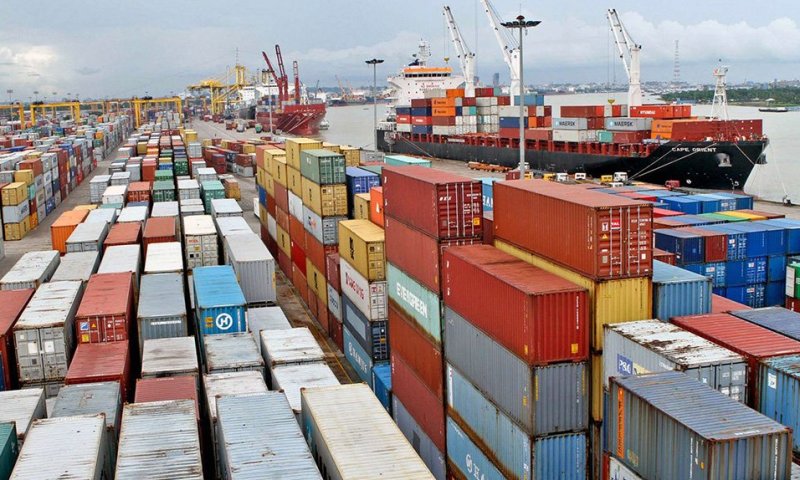
In the wake of India’s decision to withdraw the transshipment route for Bangladeshi exports—following remarks by Bangladesh’s Chief Adviser Muhammad Yunus advocating stronger ties with China—the Bangladeshi interim government has downplayed concerns over the move’s impact on trade.
Interim Commerce Adviser Sheikh Bashir Uddin, in a statement on Thursday (April 10), asserted that the cancellation of the facility would not significantly affect the country’s export capabilities. “We will attempt to overcome the crisis through our arrangements,” he said, citing discussions held with business representatives and international buyers to assess the situation.
The transshipment arrangement, in place since 2020, had allowed Bangladesh to use Indian ports and airports—excluding those for trade with Nepal and Bhutan —for sending goods to destinations in West Asia, Europe, and beyond. This route had become increasingly vital for Bangladeshi exporters, especially those in the garment sector.
In FY 2023-24, 3,373 trucks carrying export cargo entered India through the Petrapole Land Port, while FY 2024-25 saw a sharp 39% increase with 4,686 trucks carrying 7,772 consignments valued at ₹3,446.66 crore—primarily ready-made garments headed for Europe via Indian ports and airports. However, the facility’s sudden termination has brought daily transshipment consignments to a complete halt, severely affecting both Bangladeshi exporters and Indian logistics stakeholders. Petrapole, South Asia’s largest land port, is now witnessing disruptions that extend to Indian truck operators and laborers involved in cargo handling.
Despite these setbacks, Bangladesh’s Interim Commerce Adviser Sheikh Bashir Uddin asserted on April 10 that the country will manage the situation independently. “We will attempt to overcome the crisis through our arrangements,” he said, following discussions with exporters and buyers. Uddin assured that Bangladesh is taking steps to bolster its commercial capabilities and strengthen infrastructure and connectivity to mitigate the logistical and financial challenges stemming from the route’s closure.
He also noted that the U.S. government’s three-month suspension of additional tariffs offers temporary relief, allowing Bangladesh time to explore alternative arrangements. When asked whether Dhaka planned to send a formal protest to India, Uddin clarified that no such communication was currently under consideration.
India’s withdrawal from the arrangement does not affect Bangladeshi exports to Nepal and Bhutan, as such trade facilitation remains mandatory for landlocked countries under WTO provisions. However, the broader fallout from the move is already being felt by stakeholders on both sides of the border, with growing concern over the future of regional logistics and trade cooperation.