
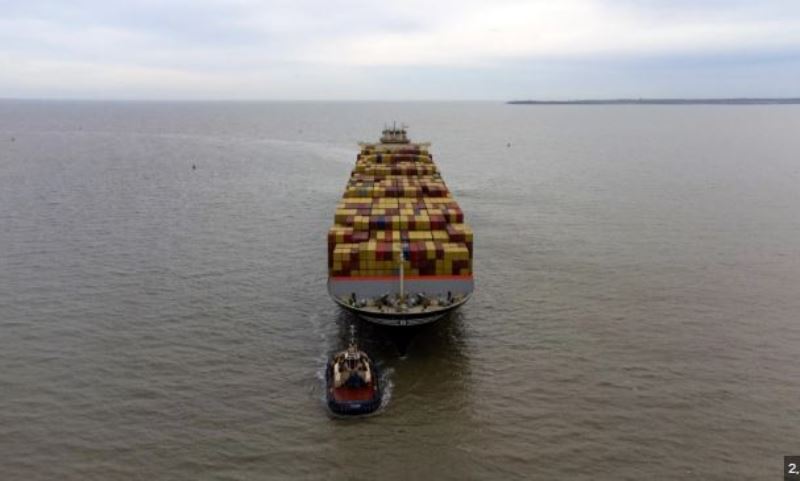
Major global shipping lines including Maersk, Hapag-Lloyd, and CMA CGM confirmed that their vessels continue to operate through the Strait of Hormuz, even as geopolitical tensions between Iran and Israel simmered ahead of a ceasefire announcement.
On Monday evening, U.S. President Donald Trump announced that Iran and Israel had agreed to a ceasefire, brokered by Qatar. The de-escalation comes after weeks of heightened tension, during which Iran threatened to shut down the vital waterway linking the Persian Gulf to the Arabian Sea. Maritime authorities also reported concerns over widespread GPS jamming and spoofing in the region, raising navigational safety issues.
Maersk, in a customer advisory, stated, “At the moment, we continue to deem sailing through the Strait of Hormuz possible, but we monitor the situation closely and have contingency plans in place should the situation change.”
Hapag-Lloyd, Maersk’s partner in the Gemini Cooperation alliance, echoed a similar stance in a separate advisory dated June 23: “At present, our vessels continue to transit the Strait of Hormuz. The safety and well-being of our crews and ships remain our highest priority. We are actively evaluating potential risks and stand ready to adjust our operations should conditions change.”
CMA CGM, the world’s third-largest container line, confirmed on June 22 that it had activated a dedicated monitoring cell for the region. “At this stage, we confirm that shipping activities are proceeding as normal in the area, and that our operations and logistics chains remain unchanged,” the company said.
Despite the ongoing volatility in the region, the continued operation of key shipping lanes highlights the industry’s reliance on real-time risk assessment and contingency planning to maintain global trade flows.