
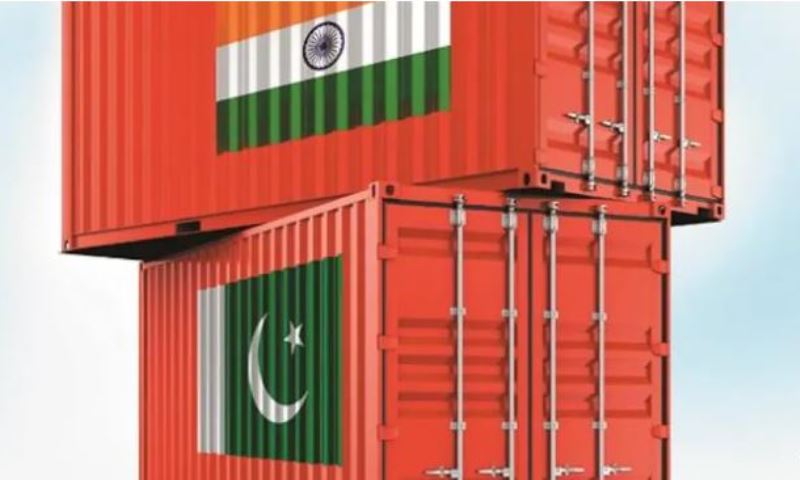
Despite political tensions and a frozen trade agreement, Pakistan’s imports from India soared to a 3-year high in FY2025. Official data from the State Bank shows imports reaching $215 million during July to May, surpassing $207 million in FY2024 and $190 million in FY2023. Surprisingly, even during a four-day military standoff in May, imports continued uninterrupted.
However, Pakistan’s exports to India have nearly vanished. In May 2025, Pakistan exported just $1,000 worth of goods to India. Over 11 months, total exports remained only $500,000, far less than $3.4 million in FY2024 and $330,000 in FY2023. This shows a sharp imbalance in bilateral trade, mostly one-sided.
Some traders believe the imports arrived through indirect channels like Dubai, Singapore, or Colombo. Payments for these goods might have been made before border tensions escalated. Many traders declined to comment openly, citing security concerns. Shipments might be classified under other origins to bypass formal restrictions.
India’s Global Trade Research Initiative (GTRI) claims informal trade with Pakistan could be worth up to $10 billion annually. This includes consumer goods, machinery, and raw materials routed through third-party countries. These figures highlight hidden trade networks, still active despite official bans and strained ties.
Experts say Pakistan’s industries heavily rely on imported components, making them vulnerable to regional supply chains. High production costs force manufacturers to seek cheaper materials from neighbors, especially India and China. Despite broken ties, economic needs are quietly keeping cross-border trade alive, outside the formal system.