
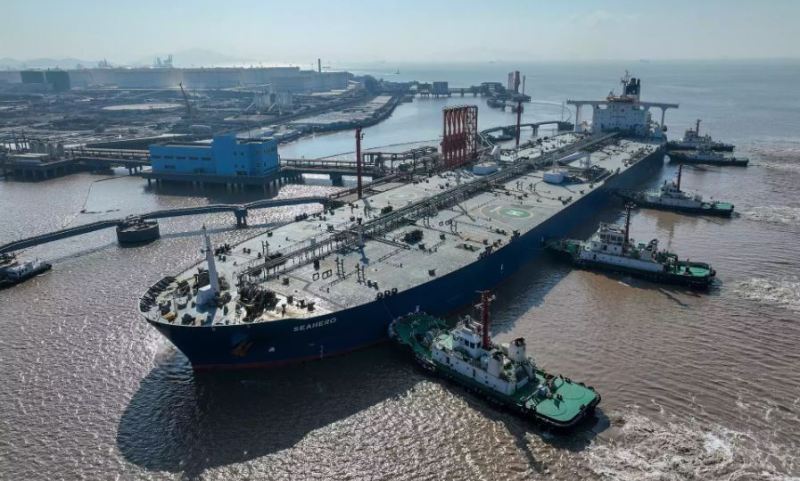
India’s shipping ministry has granted special permission for four vessels carrying Iranian crude to berth at Sikka port, following a request from Reliance Industries, according to industry sources.
The move comes as India—one of the world’s largest oil importers—seeks to navigate supply uncertainties triggered by disruptions in the Strait of Hormuz, a critical global oil transit route. Notably, India has not imported crude from Iran since 2019, when purchases were halted under pressure from U.S. sanctions.
However, a recent temporary waiver by the United States Government allowing limited Iranian oil transactions at sea has opened a narrow window for such shipments. The waiver is set to expire on April 19.
One-Time Exemption for Sanctioned Vessels
Sources indicated that the approval is a one-time exemption granted under emergency conditions. The vessels cleared to berth include aframax tanker Kaviz, VLCC Lenore, and Iran-flagged VLCCs Felicity and Hedy—all of which are over 20 years old and subject to U.S. sanctions.
Under Indian maritime regulations, older tankers typically require seaworthiness certification from recognized classification bodies such as the International Association of Classification Societies. Since many vessels in Iran’s so-called “shadow fleet” lack such certifications and standard insurance coverage, special government approval is mandatory.
Each very large crude carrier (VLCC) involved can transport up to 2 million barrels of oil, underscoring the scale of the potential supply.
Tracking and Compliance Concerns
According to tanker tracking data monitored by United Against Nuclear Iran, the vessels have been active near Iranian loading points such as Kharg Island and Chabahar Port in recent weeks.
Despite the approvals, uncertainty remains over whether Reliance will proceed with processing the crude. Sources suggest the company is carefully evaluating compliance with international sanctions and Indian regulatory requirements before making a final decision.
Separately, Indian Oil Corporation has reportedly procured Iranian oil transported via a sanctioned tanker, indicating a cautious but notable re-engagement with Iranian supplies under evolving geopolitical conditions.
The development highlights the balancing act India faces between ensuring energy security and adhering to international sanctions frameworks amid volatile global oil markets.