
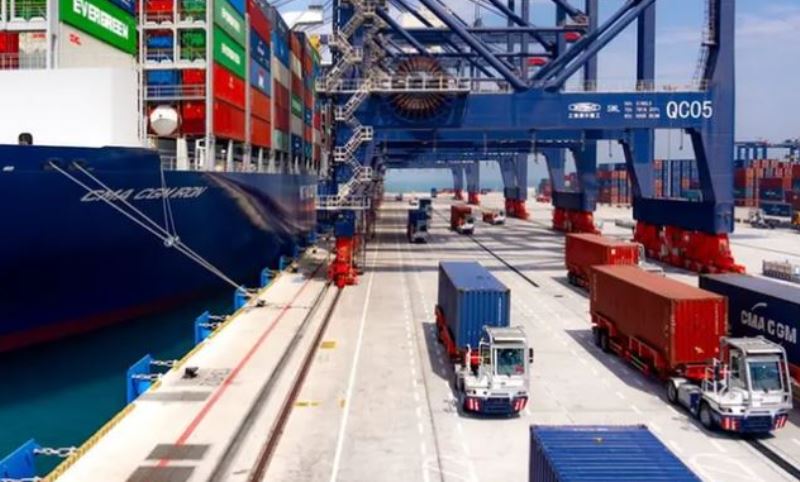
AD Ports Group has handled more than 70,000 TEUs through Fujairah during the recent period of heightened regional tensions, underscoring the growing importance of the UAE’s east coast logistics infrastructure in maintaining trade flows across the Gulf.
The company said Fujairah ports processed over 100 cargo vessels daily as supply chains adapted to disruptions affecting traditional maritime routes in the region. The surge in activity reflects increasing reliance on Gulf of Oman ports that remain outside the main risk zone linked to instability around the Strait of Hormuz.
According to AD Ports Group, alternative shipping corridors, feeder services, and inland logistics routes were activated to ensure uninterrupted cargo movement across the UAE and neighbouring Gulf markets. The group also expanded feeder connections linking India, Pakistan, Oman, Red Sea ports, and Upper Gulf trade corridors through Fujairah and Khor Fakkan.
Saif Al Mazrouei, CEO of Ports at AD Ports Group, said the company’s integrated logistics network and proactive contingency planning helped sustain regional supply chains during the crisis. The group highlighted the use of the “Green Lane” logistics mechanism, enabling cargo routed through Fujairah to be processed seamlessly within the wider UAE port ecosystem.
Industry analysts said Fujairah has become a critical maritime and logistics hub due to its strategic location on the Gulf of Oman, allowing vessels to bypass congestion and security risks associated with the Strait of Hormuz. The port has witnessed sharp increases in container handling, feeder operations, and energy shipments amid ongoing geopolitical uncertainty.
The latest cargo volumes highlight how Gulf logistics operators are increasingly relying on diversified transport corridors, bonded transit systems, and alternative ports to maintain business continuity and support regional trade resilience during periods of geopolitical disruption.