
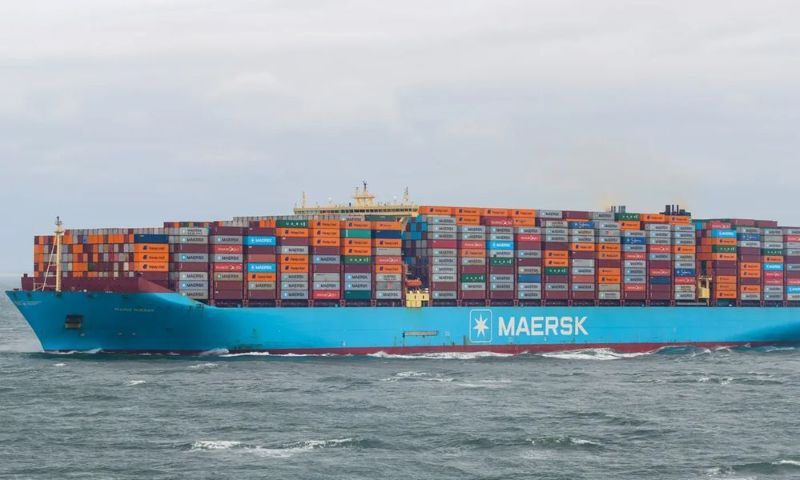
Maersk has announced revised Peak Season Surcharge (PSS) levels for container shipments moving from South Asia to Saudi Arabia and Jordan, reflecting evolving market conditions and continued demand on regional trade lanes. The updated surcharge will apply to cargo originating from key South Asian countries, including India, Pakistan, Sri Lanka and Bangladesh, destined for ports across the two Middle Eastern markets.
The revised PSS is intended to help offset higher operating costs associated with peak-season demand, vessel capacity management and network adjustments. The surcharge will apply to both dry and reefer containers, with the applicable rates varying according to cargo type and destination, in line with Maersk’s tariff schedule.
The carrier said the new surcharge will take effect from the announced implementation date, subject to local regulations, and will be applicable to all relevant bookings made during the validity period. Customers have been advised to review the updated tariff details and plan shipments accordingly to minimise disruptions and additional logistics costs.
The adjustment comes as shipping lines continue to fine-tune pricing strategies in response to seasonal cargo flows, changing trade patterns and capacity utilisation across the Middle East. Industry observers expect carriers to maintain flexible surcharge policies as they balance service reliability with fluctuating demand on regional and international container shipping routes.