
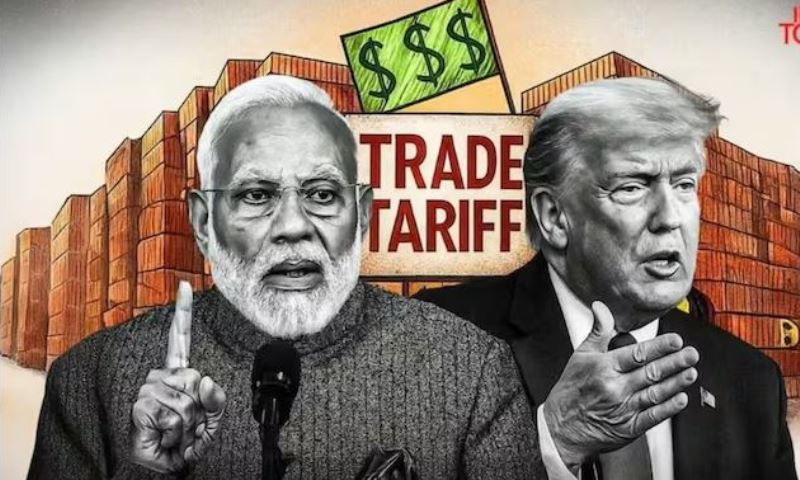
A potential India-US trade agreement could help protect Indian exports from the risk of additional US tariffs linked to New Delhi’s purchases of Russian oil, according to reports citing people familiar with the negotiations.
The development comes after US President Donald Trump signed the Lindsey O. Graham Sanctioning Russia and Iran Act of 2026, giving the US administration authority to impose tariffs of up to 100% on goods from major buyers of Russian oil and natural gas. India and China are among the countries that could fall within the scope of the legislation.
However, the law does not automatically impose a 100% tariff on India. The legislation gives the US president discretion over whether to impose tariffs and at what rate. The US Trade Representative is also required to identify the countries covered by the measure.
The tariff threat comes as India and the US continue discussions on their broader bilateral trade relationship. A February 2026 framework for an interim trade agreement included commitments to expand market access and strengthen supply-chain cooperation.
Indian officials have said New Delhi is studying the new US law and its implications, while maintaining that the country will protect its energy and economic interests.
For Indian exporters, the outcome of the trade negotiations could be significant. The US is a major destination for Indian merchandise exports, and any additional tariff linked to Russian energy purchases could affect sectors that rely heavily on the US market.
The potential trade deal therefore comes against a backdrop of two parallel issues: negotiations to expand India-US trade and Washington’s new authority to penalise major buyers of Russian energy. Whether an agreement ultimately provides India with protection from the new tariff mechanism will depend on the final terms and subsequent US policy decisions.