
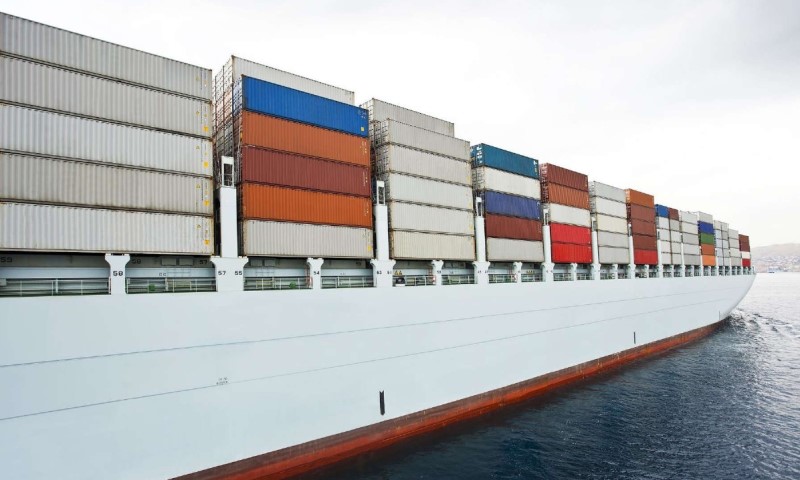
Containership charter rates have climbed to their highest level in four years, even as fixture activity declines and the global orderbook points to a record influx of new vessel capacity in 2028. The contrasting trends reflect a shortage of immediately available tonnage, prompting charterers to secure ships well ahead of delivery despite mounting concerns over the market’s longer-term outlook.
According to maritime consultancy Braemar, its containership charter index has reached 325.8, marking a 21% year-on-year increase and its highest level since autumn 2022.
However, chartering activity has weakened. Between January 1 and October 17, 2026, the number of fixtures fell 15% year on year to 853, while the total capacity fixed declined 10% to 2.54 million teu.
Braemar said the apparent contradiction between rising charter rates and falling fixture volumes reflects limited prompt vessel availability. Many owners secured long-term employment for their ships during 2024 and 2025, leaving fewer vessels available for immediate chartering.
Charterers Book Vessels Further Ahead
With available tonnage becoming increasingly difficult to secure, charterers are extending their planning horizons. Braemar reported that vessels are now being fixed an average of 7.8 months before delivery on a capacity-weighted basis, compared with 6.8 months a year earlier. For containerships of 3,000 teu and above, the lead time has exceeded 10 months.
The trend was particularly evident during the third quarter of 2026, when half of all fixtures involved vessels scheduled for delivery more than three months later. The corresponding proportion during the same period in 2025 was just 23%.
The consultancy noted that charterers appear to be securing future capacity despite the prospect of a substantial increase in vessel supply later in the decade.
Charter Costs Remain Elevated Despite Weaker Freight Rates
Charter costs have also diverged sharply from freight market movements. While the Freightos Baltic Index (FBX) declined 61% between January and October 2025, Braemar’s charter index increased by 3% over the same period.
As a result, charter costs relative to freight rates have remained unusually high, running at approximately twice their average level between 2021 and 2024, according to Braemar.
The pressure is particularly pronounced in the feeder and Panamax segments.
Containerships in the 1,500–1,900 teu range fixed for periods of nine to 15 months are commanding a median daily rate of $28,625, an increase of 18% year on year. Some recent 12-month fixtures have reached $36,500 per day.
In the 4,000–5,099 teu segment, fixture volumes declined 39%, but short-period charter rates continued to rise. Median rates increased to $58,000 per day from $51,000.
Older Vessels Continue to Command Strong Rates
The tight supply of available tonnage is also supporting demand for older ships. Vessels aged 20 years or more accounted for 30% of fixtures in 2026, compared with 26% in 2025.
A 20-year-old feeder vessel of around 1,700 teu continues to command a median daily charter rate of $24,000. In another example of the market’s strength, a Panamax containership built in 1997 was fixed at $50,000 per day in September.
These rates underline the extent to which limited vessel availability is sustaining charter values, even for ageing ships.
Maersk Expands Chartering Activity as CMA CGM Pulls Back
Among major liner operators, Maersk has emerged as the most active charterer, increasing its number of fixtures by 14% and its chartered capacity by 20%, despite the overall contraction in market activity.
CMA CGM, which led chartering activity in 2025, recorded a 41% decline in fixtures, highlighting the differing capacity strategies being pursued by major shipping lines.
Record 2028 Deliveries Threaten Future Charter Rates
Despite the current strength of the charter market, Braemar has warned that the outlook for shipowners could become considerably less favourable as newbuilding deliveries accelerate.
Since January 2025, 94 fixtures involving approximately 570,000 teu have been recorded for newbuildings scheduled for delivery in 2028, according to the consultancy.
The anticipated delivery wave is expected to add substantial capacity to the global containership fleet. Its impact could be compounded by a potential easing of Red Sea-related disruptions and forecasts of weaker demand growth in 2027.
Together, these factors could shift the balance of negotiating power towards charterers and place downward pressure on charter rates as additional vessels enter service.
Braemar analyst Jonathan Roach cautioned that the current rush to secure tonnage may not last. He observed that charterers are queuing to secure vessels today, but by 2028, shipowners could find themselves competing to attract employment for their ships.
The market therefore faces a striking contrast: a shortage of immediately available containerships is driving charter rates higher today, while a record orderbook threatens to create an oversupply of capacity in 2028.