August10 , 2026

    Panama Canal sees slight rise in shipping activity

    Related

    JNPA Emerges as India’s Top Revenue-Generating Major Port in FY26

    Jawaharlal Nehru Port Authority (JNPA) in Maharashtra has emerged...

    Centre Funds ₹7.24 Crore for Multi-Purpose Berth Development at Kollam Port

    The Union government has provided financial assistance of ₹7.24...

    DPA Kandla Records 21.03% YoY Growth in Cargo Handling, Crosses 62.86 MMT

    Deendayal Port Authority (DPA), Kandla, continues to strengthen its...

    NMPA Handles First-Ever Shipment of Steel Grade Pig Iron for Export to Kenya

    The New Mangalore Port Authority (NMPA) has achieved a...

    Share

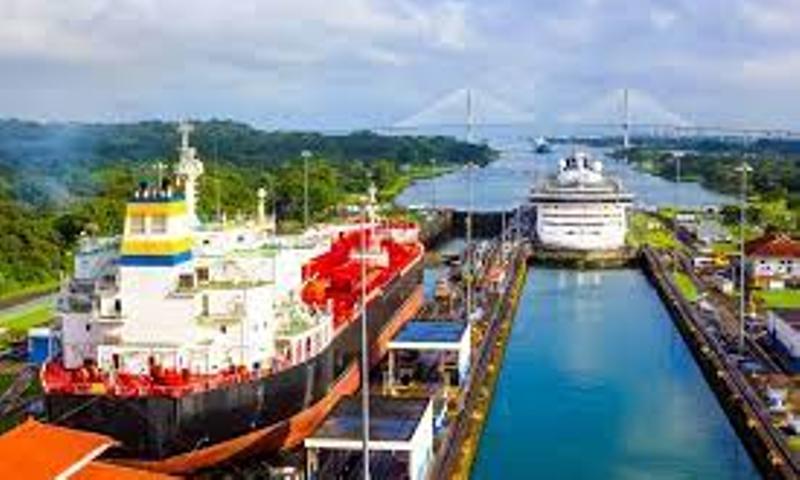
    Shipping traffic in the Panama Canal has witnessed a recent uptick following relief from drought conditions, as per reports.

    The droughts were thought by international scientists to be driven by El Niño, a weather abnormality that saw reduced rainfall, as opposed to climate change. Despite its recent alleviation, the Financial Times has reported that water levels yet remain lower than usual.

    Ship arrivals in the canal totalled 739 in April, down from 1,026 the previous year. This contrasts with a low of 692 in February, as reported by Marine Traffic, following over six months of disruption.

    Water levels in Lake Gatún, the canal’s rain-fed reservoir, dropped to record lows in June of last year and remained there until mid-March of this year. Due to these stifling events, the Panama Canal Authority limited movement through the canal, subsequently leading to a buildup of ships awaiting their transit.

    Despite drought being the most pressing issue for trade in the region, Panama remains among the world’s wettest nations. According to the Financial Times, the water levels are expected to rise by more than 2 metres in the upcoming May to December rainy season.

    However, as seen in a study released by the World Weather Attribution group of scientists who examine extreme weather trends, El Niño was largely responsible for the reduced rainfall around the canal, which was only compounded by the warming of the Pacific Ocean’s surface.

    In 2023, annual rainfall fell by roughly a quarter compared to average levels. Researchers also marked it as Panama’s third driest year on record. Following their analysis of weather data and simulating climate scenarios, the researchers concluded that El Niño had doubled the likelihood of decreased rainfall in 2023 and that it was this phenomenon, as opposed to global warming, that had primarily driven the drought.

    Despite these unprecedented lows, the authority’s management of the passage prevented the surrounding communities in Panama from suffering more severe consequences than had been felt in previous droughts.

    “Restrictions on shipping through the Canal ensured Lake Gatún didn’t fall to dangerous levels, and people in Panama didn’t face water shortages like they did in 2015 and 2016,” said Maja Vahlberg, risk consultant at the Red Cross Red Crescent Climate Centre.

    WWA scientists warned that authorities may reimpose shipping restrictions in the future to safeguard drinking water reserves, especially during El Niño years. This has raised concerns of higher costs. Transit bids for the canal reached unprecedented levels last year due to the drought conditions with ships paying a record-setting $4 million to bypass the queue at its peak.

    The researchers also noted from their findings that the Lake Gatún reservoir is experiencing sustained pressure due to the increased shipping activity following the canal’s recent expansion along with the growing local population, reported the Financial Times.

    In other world events impacting global trade, according to data released by Xeneta, the Red Sea conflict resulted in enormous increases in carbon emissions from ocean freight container shipping.

    The Xeneta & Marine Benchmark Carbon Emissions Index (CEI), which evaluates carbon emissions per tonne of cargo moved across the world’s top 13 trades, reached 107.4 points in Q1 2024, its highest level since the index’s inception in Q1 2018.

    spot_img