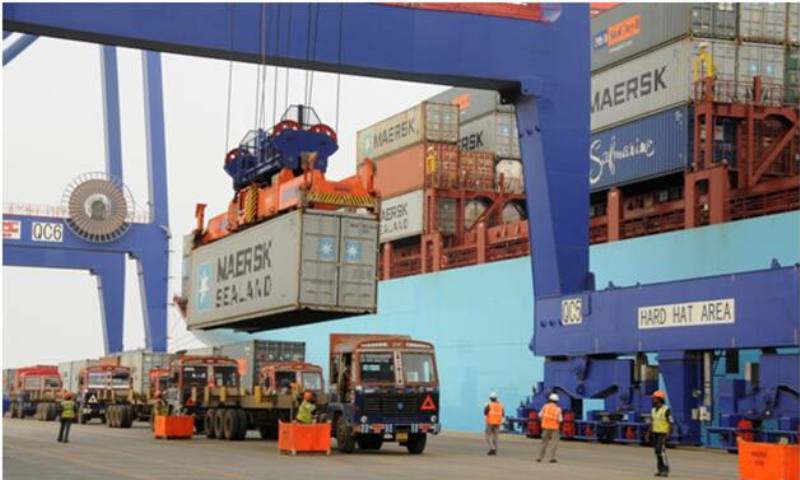
The recently announced Indian Budget 2024-25 has provided significant relief to textile exporters in importing raw materials to meet their export commitments. Indian Finance Minister Nirmala Sitharaman has introduced self-certification to prove the origin of imported goods in cases of export obligation under free trade agreements (FTA). Insiders in the textile industry have stated that this is an important step for easing the process of doing business. Textile exporters need to import fabric and other items used in garments for exports.
Industry experts consider this an alignment to boost exports to FTA partner countries. Proving the origin of goods is crucial for customs clearance and determining the duties that must be paid. Currently, importers need to follow a lengthy process to prove the origin of goods.
In the Union Budget, ‘certificate’ has been replaced with ‘proof’. The proof of origin can be a certificate or declaration issued as per the provisions of a trade agreement, certifying or declaring that the goods fulfil the country-of-origin criteria and other requirements specified in the said agreement.
The amendment in Section 28DA of the Customs Act will enable the acceptance of different types of proof of origin provided in trade agreements, aligning the provision with new trade agreements which provide for self-certification.
KM Subramanian, president of the Tiruppur Exporters Association (TEA), said, “As per the previous system, an importer had to produce an origin certificate from the exporting partner. Now it is going to be self-declaration from the importer, which eases formalities and is part of the ease of doing business.”
He said that the amendment will greatly assist in importing fabrics, particularly catering to the MMF sector in the apparel industry.
Industry sources indicated that several items are used in apparel manufacturing. Certification of origin becomes more important in the case of exports under FTA rules. Self-certification will save time, energy, and cost for the export of garments.
