
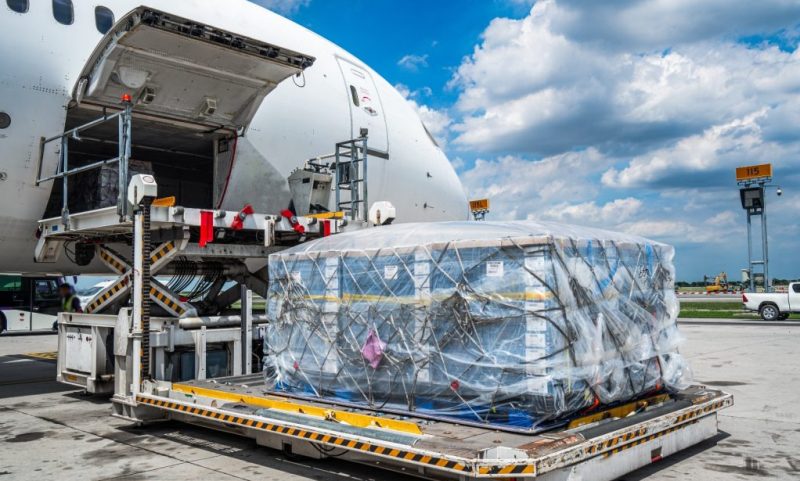
As global supply chains evolve and e-commerce continues to reshape consumer expectations, dedicated freighter aircraft are set to play a more prominent role in international logistics.
According to Boeing’s World Air Cargo Forecast 2024–2043, the global freighter fleet is poised for a significant expansion. Over the next two decades, Boeing projects 2,845 new freighter aircraft will be delivered worldwide, with the Asia Pacific and Middle East regions positioned as key growth drivers.
A post-pandemic shift
The COVID-19 pandemic underscored the vital role freighters play in global trade. When international passenger flights were grounded, it was the freighter fleet that maintained the flow of critical goods, from pharmaceuticals to electronics.
Although commercial flights have long since returned, the industry’s reliance on freighters has not waned. In 2023, dedicated cargo aircraft transported more than half of all global air cargo traffic by volume and were responsible for generating 90% of the sector’s revenue. This heavy dependence on freighters has led to a renewed strategic focus on fleet development and capacity planning across the industry.
Boeing anticipates a 66% increase in the global freighter fleet by 2043, growing from 2,340 aircraft to 3,900. Of the new deliveries, nearly half will replace aging aircraft, while the remainder will support growing demand across global markets.
The report breaks down future deliveries into three categories: standard-body freighters with payloads below 40 tonnes, medium widebody freighters ranging between 40 and 80 tonnes, and large widebodies capable of carrying more than 80 tonnes. While two-thirds of these aircraft will be conversions from retired passenger jets, particularly in the standard-body segment, Boeing notes a rising preference for factory-built large widebody freighters that offer greater efficiency and range—especially relevant for operators in long-haul markets like the Middle East.
At the heart of global growth
Asia Pacific and North America are each expected to receive approximately one-third of these new freighters. However, the Middle East and Africa region will also see a notable share, receiving 9% of total freighter deliveries. This marks a significant shift for the Gulf, where air cargo has traditionally relied on the belly capacity of widebody passenger aircraft.
Today, carriers such as Emirates SkyCargo, Qatar Airways Cargo, and Etihad Cargo are making strategic moves to expand their dedicated freighter fleets. These airlines are also investing in specialised cargo handling infrastructure, with a growing emphasis on high-value and temperature-sensitive segments including pharmaceuticals, electronics, and perishables.
A major force behind this surge in demand is the continued growth of e-commerce. Boeing identifies the rapid rise of express cargo and integrated delivery networks as a primary driver of air cargo growth.
In 2023, express carriers accounted for 18% of global air cargo traffic. By 2043, that share is expected to rise to 25%. Express cargo is forecast to grow at an average annual rate of 5.8 percent, far exceeding the broader industry average. This acceleration is powered by fast-growing consumer markets in China, India, and Southeast Asia, where digital commerce platforms are transforming buying behavior. With global e-commerce revenues projected to increase by nine percent annually through 2029, the demand for fast, flexible, and reliable air freight services will only intensify.
The Middle East is strategically positioned to benefit from these dynamics. Its central location between Asia, Europe, and Africa allows it to serve as a critical transshipment point for cross-border e-commerce.
Gulf airports such as Dubai International, Abu Dhabi, and Doha are investing heavily in cargo terminals and free zones designed specifically to support e-commerce flows. Additionally, national strategies are aligning around logistics growth. Saudi Arabia’s National Transport and Logistics Strategy aims to position the Kingdom among the world’s top ten logistics hubs, backed by more than $100 billion in planned investments across transport infrastructure, digital systems, and cargo handling capabilities.
Supply chain diversification
Beyond e-commerce, the diversification of global supply chains is also contributing to increased freighter demand. The disruptions caused by the pandemic, combined with escalating geopolitical tensions and labor shortages, have encouraged manufacturers to reduce dependence on single-source supply chains.
Many companies are shifting operations away from China to other countries in Southeast Asia and South Asia, including Vietnam, Thailand, and India. These fragmented supply networks create the need for greater air connectivity between manufacturing hubs, regional assembly points, and consumer markets.
Freighters are uniquely suited to serve this purpose, offering direct routing, time-sensitive scheduling, and the ability to handle oversized or hazardous cargo that cannot be accommodated in passenger aircraft holds.
Freighter-led growth
The Middle East’s evolving role as a global logistics hub is also reflected in fleet investment strategies. Carriers in the region are increasingly opting for factory-built widebody freighters such as the Boeing 777F and the forthcoming 777-8F. These aircraft offer superior fuel efficiency, higher utilisation rates, and longer range, making them well-suited to long-haul routes that connect Asia to Europe and Africa. For operators handling high-yield cargo such as pharmaceuticals, electronics, or fashion goods, the capabilities of these aircraft align with the region’s ambition to provide premium, high-performance logistics services.
This transformation extends beyond the airlines. For airports, free zones, and logistics service providers across the Middle East, Boeing’s forecast presents a strategic roadmap. Infrastructure investments must prioritise cold chain capacity, digital customs clearance, bonded warehousing, and AI-driven cargo optimisation systems. Forwarders and integrators will need to scale up their capabilities to meet the growing complexity of e-commerce fulfillment, express delivery expectations, and multimodal transshipment. Governments can support this momentum by advancing bilateral air cargo agreements, facilitating trade liberalisation, and investing in training programs to build a highly skilled logistics workforce.
Challenges remain, including competition from surface transport corridors, the pressure to decarbonise air cargo operations, and the volatility of energy markets. However, the region’s investment momentum, coupled with its strategic location and forward-looking policies, positions it well to overcome these obstacles. The Middle East is no longer just a stopover between continents—it is becoming a critical engine of global cargo movement.