
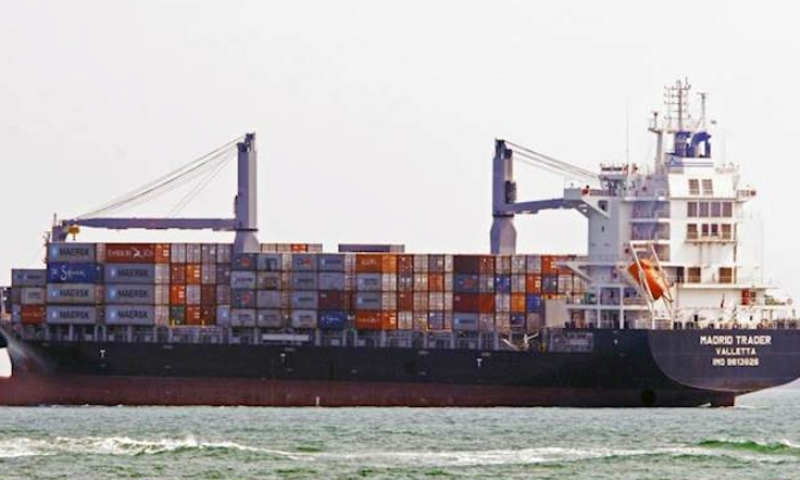
Cosco Shipping Lines has been facilitating containerised transport of grain, to meet the needs of Chinese agribusinesses whose cargo volumes are not large enough for bulk carriers.
According to China’s Assets Supervision and Administration Commission of the State Council, which oversees state-owned enterprises, since 2024, more grain has been moving in containers in the north-east of the country.
Previously, as much as 80% of grain cargo in north-eastern China was moved in bulk carriers; now, 50% is moved in containers.
A Cosco executive said that agribusinesses’ requirements had changed.
He said: “Today, the concept of ‘logistical costs’ isn’t just about freight, but the sum of all factors, such as punctuality, reliability and service. Staff from our Dalian branch visited customers to understand their needs.
“Some small and mid-sized agribusinesses don’t purchase or import in large volumes, so the cost of chartering bulk carriers is too high for them, especially if they need to deliver the cargo to end-users in different parts of China. In their case, it’s better to divide cargo transportation.”
Besides seaborne transport, there is also a need to offer land-based solutions, added the executive, and cited the example of Jiamusi, the largest grain-growing city in the country, located in Heilongjiang province.
In 2024, Jiamusi’s output of various grains exceeded 11m tonnes. Cosco’s intra-Asia unit, Shanghai Pan Asia Shipping, worked with the company’s Dalian branch to offer a rail-sea transport service to shippers that needed to move grains from Jiamusi, via Dalian.
To date, Cosco’s Dalian branch has created 32 import and export rail- and-sea transport channels and 88 container pick-up/return points.
The Cosco executive said: “Global grain trade is changing as China imports more grain, coupled with geopolitical factors. This requires agricultural enterprises to be responsible for downstream customers and provide better services than overseas materials. Therefore a stable, efficient and low-loss logistics model has become the core demand of customers.”