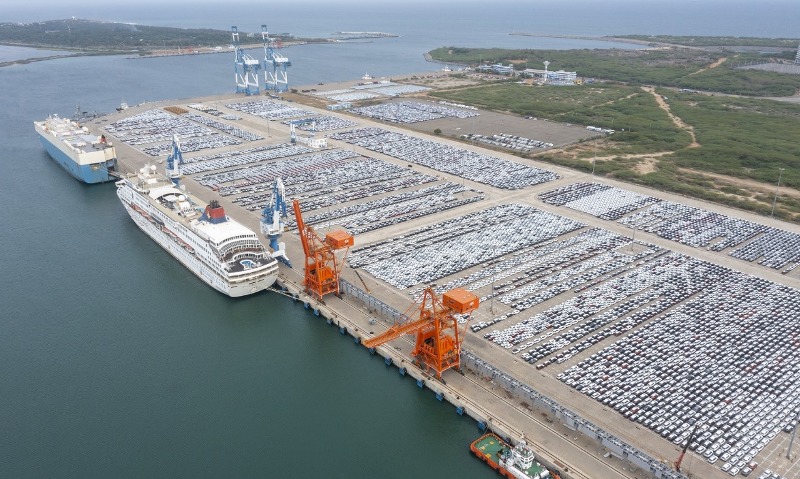
Hambantota International Port (HIP) closed 2025 with a landmark performance, with container volumes surging from 53,170 TEUs in 2024 to 428,036 TEUs in 2025.
Containerised cargo tonnage rose from 657,504 metric tonnes to 5.43 million metric tonnes, marking HIP’s rapid emergence as a significant container gateway within a single year.
HIP handled 8.24 million metric tonnes of cargo in 2025, up from 3.0 million metric tonnes in 2024, driven by sharp growth across container, RoRo and bulk cargo segments amid volatile trade flows, supply chain realignments, congestion pressures and rising operating costs worldwide.
Scheduled for completion by the end of 2026, the second phase will increase the port’s annual container handling capacity to approximately 2 million TEUs.
This will be achieved by allocating four dedicated container berths and adding additional equipment, including six quay cranes (QCs) and sixteen rubber-tyred gantry cranes (RTCs).
RoRo operations also delivered solid growth despite subdued global automotive markets. HIP handled 726,153 RoRo units in 2025, up from 579,362 units the previous year, with RoRo tonnage increasing 25 per cent YoY to 965,783 metric tonnes, supported by steady automotive and project cargo demand.
Bulk and break bulk cargo volumes strengthened further, rising 32 per cent to 1.18 million metric tonnes, reinforcing the port’s growing role in supporting industrial activity, infrastructure development and diversified supply chains. Oil and gas volumes remained broadly stable at 661,131 metric tonnes, reflecting softer global energy market conditions.
“2025 was not an easy year to be a port,” said Wilson Qu, CEO of Hambantota International Port Group.
“What makes this performance remarkable is not just the scale of growth, but that it was achieved amid sustained global disruption. These volumes reflect customer confidence, operational flexibility, aggressive marketing strategies in Sri Lanka and internationally, as well as the commitment of our team.”
Last September, Ocean Network Express announced the launch of its new intermodal service in Sri Lanka to enhance its inland logistics services.
